Q3 2009 MA Bank Report: Distress Totals Rise

New distressed debt numbers from the banking sector have recently been published, so it is time again to take a look at the 181 banks that make up our local lending landscape. There is a lot of talk about a very serious forthcoming correction in commercial real estate and the effects that this will have on our financial institutions. New numbers indicate, however, that Massachusetts lenders may be set to dodge this bullet… at least to some degree.

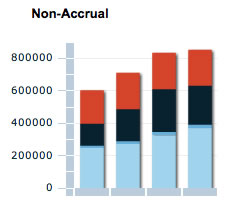
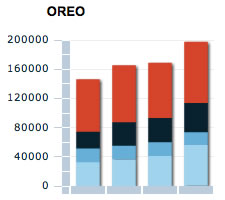
Overall, Massachusetts banks saw an increase in their distressed real estate balances of only about 5% Q2-Q3 2009. I don’t know if this sounds like a lot or a little to you, but compared to the US totals at 11% its not too bad. Still, distress totals are up 72% over the last four quarters, not a confidence-inspiring figure.

This quarter is the first quarter that two Massachusetts banks are reporting capital adequacy numbers below those deemed healthy. In lay terms, capital adequacy has to do with the ratio of what you’ve got in the vault to what you’ve got on the street. Tier 1 + Tier 2 capital to risk weight adjusted assets should be no lower than 8%. One of these banks, Mt Washington Bank, recently announced a merger with East Boston Savings Bank, which, while reporting a little less than $20 Million in non-accrual loans and a little more than $2.5MM in (mostly construction) REO, is well capitalized reporting a ratio of 14% compared to Mt Washington’s 6%.

The other bank of note is Butler Bank. Butler reported capital adequacy ratios at 2% and 3%, a far cry from the 4% and 8% that regulators like to see. Butler’s construction portfolio has gone south at a rate of almost 40% (39.59%) and is by every measure the main source of their ills. It has been reported Boston Business Journal that the bank is being closely monitored by the FDIC.

Overall, Massachusetts banks saw the following changes from Q2 to Q3.

  • 15% increase in residential distress, largely driven by REO
  • 3.26% increase in distressed multifamily
  • Unchanged (virtually) commercial real estate distress
  • Unchanged (less than 1%) construction distress

The distressed real estate totals are calculated by adding a bank’s 90+day late loans, non-accrual loans, and REO (bank-owned property). It appears that we may be getting over the hump with construction loans, both locally and nationally, but that doesn’t mean that banks have dealt with the construction problems at hand only that most of the problems are already in the system. For example, while non-performing construction loans with Mass. banks fell by 2% to $222M construction REO (bank-owned) grew from $75.7M to $84M.

There are strong indicators that many, if not most, banks (with problems) are postponing inevitable losses as they move paper around internally. At some point, that will have to stop, and distressed properties will have to be sold. Today, Massachusetts-based banks are holding about $1.33 billion in distressed real estate loans and property. About two-thirds of that is residential, construction, and multifamily, while the balance is commercial. It’s important to remember that the numbers I’m giving you do not represent the whole of the distressed real estate market in Massachusetts. But only the numbers held at Massachusetts-based banks. That means Bank of America, Citi, Deutsche Bank, and all of the largest lenders’ numbers, as well as mortgage-backed securities are  unrepresented.
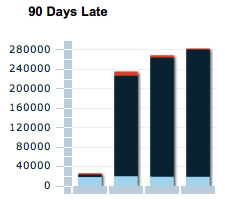
MA-90-0909MA-NA-0909MA-OR-0909

Tufts Dental Completes Construction

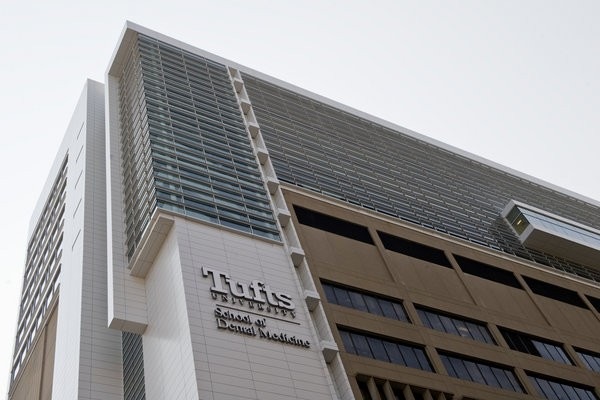
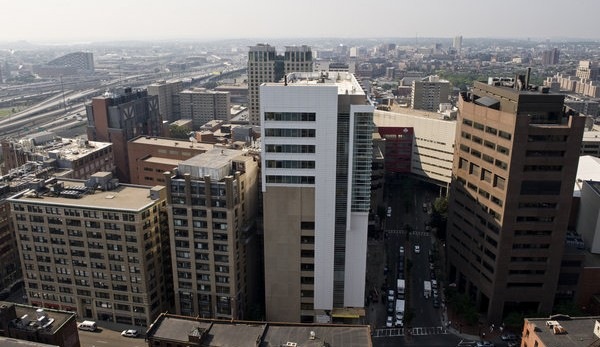
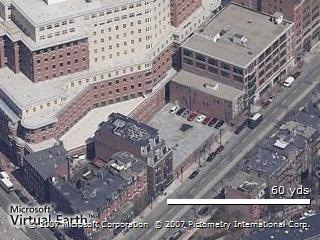
Following approximately 1.5 years of construction, Tufts Dental School recently completed its vertical expansion project, adding 5 floors and approximately 95,000 square feet to the downtown Boston location. The new space expands Tufts’ patient clinics, classrooms, offices, and Continuing Education and research facilities.

November 20, 2009 marked the dedication and grand opening of the redeveloped building, located on the edge of Boston’s Chinatown neighborhood.  The development effort, launched in April 2008, was funded mainly through private donations of alumni.

In the face of a difficult commercial real estate market, Tufts Dental School is able to fund and complete a major construction project largely because of its ability to diversify revenue generation across three separate and distinct activities – the school draws donations from alumni, collects tuition from students of its four year DMD program, and generates revenue from its internal clinic staffed by students, which serves more than 20,000 patients each year on a for-fee basis.

Tufts Dental School Boston

Tufts Dental School Vertical Expansion Project

Luxury Condo Market Slows Down

Amid speculation of whether the upper class is being impacted as much as other socioeconomic classes during the world’s economic downturn, luxury million dollar real estate in downtown Boston points to a slowdown.  From 2008 to 2009, sales activity in the $1 million + downtown Boston condo market fell approximately 22%.

While the rich may be buying again in certain product areas (see Rich Buying Again, But Middle Class Still Hurting), luxury housing in Boston is not yet one of them.  Year-to-date in 2009, 198 condos priced at or above $1 million have sold in downtown Boston, down from 255 during the same time period in 2008 according to MLSpin.  The amount of time, or days on market, that those units are sitting on the market for sale has decreased from 164 during 2008 to 139 during 2009, a sign that what is being listed for sale is selling at a faster pace.  However, the sale price to original listing price ratio, a measure of how well units are being priced in the eyes of the market, has fallen, from 105% in 2008 to 90% in 2009.

The $4 million to $10 million market has been hit hardest, with sales down approximately 71% from 2008 to 2009.

The Bryant: Beginning to End Photos

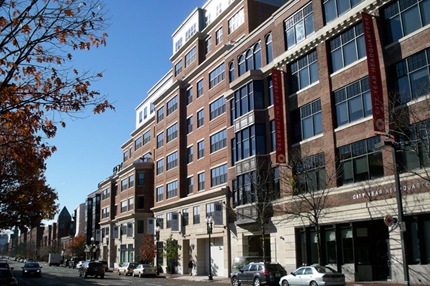
October 2006 saw construction begin on the Bryant Back Bay (at that time, known as the Bryant on Columbus), and recently released is the first time series set of Bryant Back Bay construction photos that chronicles the building from ground-up construction to the 50-unit luxury condo development that it is today.

The north side of the block between Dartmouth and Clarendon now appears complete, with a significantly different feel from the blacktop parking lot that occupied the site before construction on the Bryant began in late 2006.

Bryant Construction Site Pre-2006

Bryant Back Bay November 2009

Downtown Condo Inventory Up Slightly

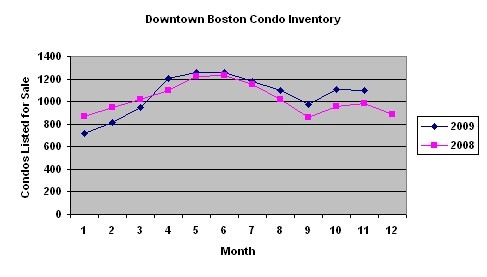
While transaction sales volume in downtown Boston has been off year over year, meaning that there are less condos actually selling in 2009 versus that which sold in 2008, what’s happening to inventory?  Inventory represents the supply of choice that buyers have in the marketplace, and given the economics of the situation, can have an impact on prices as well.

While downtown Boston condo inventory began the 2009 calendar year below 2008 levels, it has tracked very closely with numbers from the previous year.  This trend continued up until August of 2009, when inventory levels did not drop off as substantially as in 2008 – August historically represents the month when inventory levels push down through a post summer dip, which typically lasts through the end of September.

Boston Condo Inventory

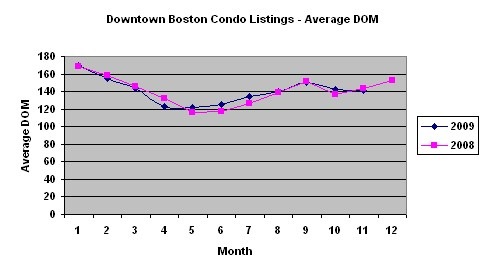
November 2009 condo inventory is up approximately 12% from the same time period in 2008, yet the average days on market (DOM) that a condo is sitting for sale is virtually the same that was experienced in 2008.  By reading between the lines, despite inventory levels being slightly up, transaction sales volume on a percentage basis is actually down more, thus, the absolute number of new listings hitting the market has decreased year over year.  Nonetheless, choice, at least at the superficial level of number of current listings available for sale, is still quite good for buyers.

Average Days on Market

Downtown Boston neighborhoods considered include: Back Bay, Bay Village, Beacon Hill, Chinatown, Financial District, Leather District, Midtown, North End, Seaport District, South Boston, South End, The Fenway, Theatre District, Waterfront, West End

Open House Reminder

Bostonians have over 350 open houses to choose from today across the downtown neighborhoods, for homes listed anywhere from $219,000 for a South End studio to $3,100,000 for a Back Bay 3 bedroom 2.5 bathroom penthouse.

When planning out your day of touring, ensure that you have taken into account the end of daylight savings time that took place earlier this morning – check the official US time website to sync up your clocks if they have not already done so on their own.

Understanding the HUD-1 Settlement Statement

What is a HUD-1 Settlement Statement and When is it Used?

The HUD-1 Settlement Statement, which is commonly referred to as the HUD or the Settlement Statement, is a standardized form which provides a line item detail of all of the charges associated with a residential real estate transaction (i.e. a purchase or refinance).

The Real Estate Settlement Procedures Act (commonly known as RESPA) requires the use of the HUD-1 Settlement Statement for transactions involving a federally related mortgage and in which there is a Borrower and a Seller. However, the industry standard is to use the HUD-1 for cash deals and refinances as well.

How is the Settlement Statement Read?

Page 1 of the Settlement Statement identifies the loan type (e.g. FHA, VA, conventional), the Buyer/Borrower, the Lender, the Seller, the Settlement Agent, the property location, and the settlement and disbursement dates. In addition, the first page provides a summary of the transaction with the Buyer’s side of the transaction documented in the left column of the Settlement Statement and the Seller’s side recorded in the right column. If the transaction is a refinance, a summary of the Borrower’s transaction will appear in the left column and the right column will be left blank since there is no Seller.

Page 2 of the Settlement Statement provides a line by line accounting of the various settlement charges with the Buyer’s fees again accounted for in the left column and the Seller’s charges listed in the right column. These settlement charges are grouped by type. For example, Items Required by the Lender to be Paid in Advance (e.g. prepaid interest, mortgage insurance premium, hazard insurance premium) can be found in Section 900 of the Settlement Statement. All of the individual settlement charges are then totaled at Line 1400 of the HUD (titled Total Settlement Charges) and recorded again on Page 1 at Line 103.

Download a sample HUD-1 Settlement Statement (1.34 MB PDF)

Summary of the HUD-1 Settlement Statement

The HUD is a standardized form which provides a line item accounting of the transaction. It is commonly used for both purchases and refinances, although it is only required by RESPA in transactions involving a federally related mortgage and in which there is a Borrower and a Seller.

In preparing for a real estate closing, be sure to review the HUD before arriving at the closing table (presuming of course that time allows for the circulation of the final HUD in advance of closing; in practice this does not always happen as oftentimes there are last minute adjustments). Do not presume that the HUD is perfect. Although the settlement agent should thoroughly review the HUD prior to circulating the final version, it is entirely possible that a mistake was made while entering the data. If you have questions, consult with your attorney and real estate agent. By reviewing the HUD and addressing any issues in advance of the closing, you are setting the stage for a smooth and successful closing.

Massachusetts’ Banks Report Card

While the recession enders cheer positive signs in the stock market hailing the return of the bulls, everyone else seems to be wondering where the jobs are, and real estate industry folks are pointing at the long shadow being cast by the coming wave of commercial real estate problems. While there are no answers to the employment numbers or the stock market, there may be a real estate crystal ball.

It is all about the banks. Banks not only control the reigns to capital and reasonable debt, at a time like this when debt positions are the only positions left in real estate, banks control a whole lot more. In fact recent bank data suggests that institutions are in control of hundreds of billions in real estate. How they handle it will affect us deeply. In this installment we’ll look at the 180 (more or less) local lenders are dealing with in terms of real estate and what to expect next.

Massachusetts’ banks are generally fairing better than the those nationally when it comes to real estate loans. Approximately 2.2% of all the banks in the US are headquartered in MA, while our banks only hold about .44% of the real estate problems. This is a good start. The most recent consolidated bank reports available show that MA banks hold only about $1.27B in problems. A drop in the bucket compared to the $290B+ in whole loan and REO problems with lenders nationally.

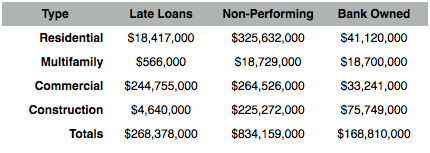
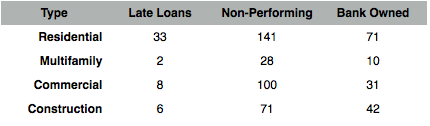
It’s not all peaches and cream though. Many things are tracked, but 3 of those things fall into the distressed real estate pipeline, including 90 day late loans, nonaccrual loans, and REO. For each of these three columns we track residential, commercial, construction, and multifamily problems. In nearly all cases, and in almost every category, distressed real estate balances are growing nationally and locally.

Dollar Volume of Distressed Assets at MA Banks

Massachusetts based banks are reporting increased real estate problems.

Massachusetts based banks are reporting increased real estate problems.

Number of Massachusetts Banks with Distressed Assets

More Massachusetts based banks are reporting problems.

More Massachusetts based banks are reporting problems.

Do you notice a pattern?

Let’s ignore the first column for now because 90-Day-Lates are not as good a forecasting tool as non-accrual or non-performing loans. In nearly every category problems are mounting, not just with individual banks but across a greater number of banks.  If a crystal ball exists though, here it is in the numbers.

The hunch is on continued problems across the real estate spectrum, more struggling banks, more struggling property owners and certainly more great deals for those with capital. The next 18-24 months should prove to be very exciting for those prepared.

Boston W Hotel to Open This Week

Later this week, on Thursday, October 29, 2009, a long awaited opening event will take place at the Boston W Hotel.  The opening, however, could be characterized as a “soft” opening versus a “grand” opening because there is still work to be done on the building.

The Hotel will open its doors, yet, the Bliss Spa, standard fare at the luxury W brand, as well as the signature bar and nightclub to be called Descent, are not scheduled to open until the spring of 2010.  Hotel management will hold an official “grand” opening event once those amenities are fully operational.

Sawyer Enterprises, the developer behind the Boston W Hotel, has not yet fully built out the signature spa and showcase lounge because it does not currently have $10.4 million in capital to go forward with the construction.  Sawyer is in negotiations with the City of Boston to obtain the additional financing to finish off the hotel, yet the City appears to be apprehensive to extend the financing because Sawyer’s collateral for the funds is the building itself, which has already been extended as collateral to other financiers.

The W will attempt to charge an average room rate of approximately $300 per night, a figure higher than other Boston luxury hotels are securing during times of peak demand.  The 123 luxury residential condos on the upper floors of the building are currently still scheduled for a phased opening in the late 2009 or early 2010 timeframe.

Bryant Back Bay Condo Auction Results

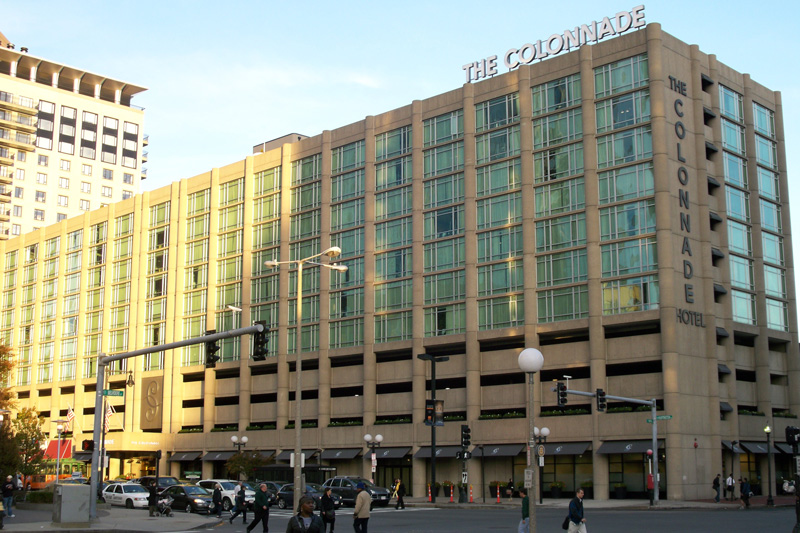
Sold. On a crisp fall day at the Colonnade Hotel in Boston’s Back Bay , the second much anticipated downtown Boston condo auction of 2009 took place in front of a group of poised bidders and their real estate professionals.  The market waited patiently for less than an hour to see what the results would show for the first large-scale Back Bay condo auction of the decade.

10 units at the 50-unit Bryant Back Bay high-end condo development on the border of the Back Bay and the South End were released by the developer for sale at auction, and were sold within 45 minutes of the auction commencing.  Bidders, each with a $20,000 certified check in hand, watched the auction process unfold in front of them.  The Bryant Back Bay is the fourth downtown Boston property to go to auction since 2006, following the Folio, Broadluxe, and the 1850 Lofts, and it is the first Back Bay property to partially go to auction this decade.

The development “partially” went to auction because there were approximately 45 units remaining for sale in the building before the auction began, the developer released 10 for sale at the auction event, and intends for the auction to set a market driven price for the remainder of units which will be sold at auction prices, but through a normal sales process.

The price point at which the developer was listing units for sale before the auction began was approximately $980 per square foot.  The auction was coordinated with minimum bids that averaged $597 per square foot.  The auction event itself resulted in the market setting an average price point of $675 per square foot, approximately 30% off original asking prices, and some $300,000 above minimum bid prices.

Download the full Bryant Back Bay Condo Auction Results (PDF 52 KB)

Accelerated Marketing Partners, the firm the Bryant’s developer hired to bring the property to auction, leveraged a similar tactic at the recent Nouvelle at Natick condo auction outside of Boston earlier this month, where they sold 43 units at auction prices, and used the newly established price point to drive further sales of remaining units at the development (see Nouvelle at Natick Condo Auction Results).  The Bryant Back Bay will leverage the auction results as a bell weather for eventually moving remaining units in the building to a sold status.

Colonnade Boston Hotel