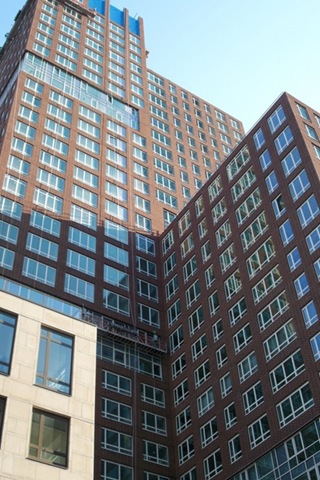
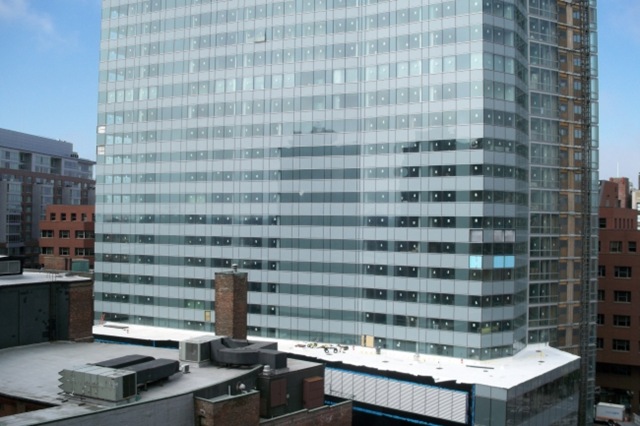
Downtown Residential Development Continues

Albeit smaller projects, and slowly, downtown Boston is still seeing the addition of residential condo inventory through new construction and redevelopment.  The Boston W was the last large-scale project to receive financing for construction, and while there has not been additional large-scale projects green-lighted for development in Boston pre-dating the recession, small-scale development is happening across various neighborhoods of downtown Boston.  Two examples include a South End redevelopment at 655 Tremont Street, and a new construction on an empty parking lot at the corner of Clarendon and Lawrence.

South End 655 Tremont Street

At the northwest corner of Tremont Street and W Brookline Street in the South End, 655 Tremont is a 10-unit redevelopment of an existing mixed-use building.  Construction began in 2009, and currently, one unit in the development has sold, and another is under agreement (according to MLSpin).

The development has pushed eco-friendly construction with eucalyptus floors throughout.  The units and building boast generous closets, deeded storage, a bike room, and a common roof deck.  Prices for the 1 bedroom 1 bathroom, 1 bedroom 1.5 bathroom, and 2 bedroom 1.5 bathroom units range from $424,900 – $779,900.
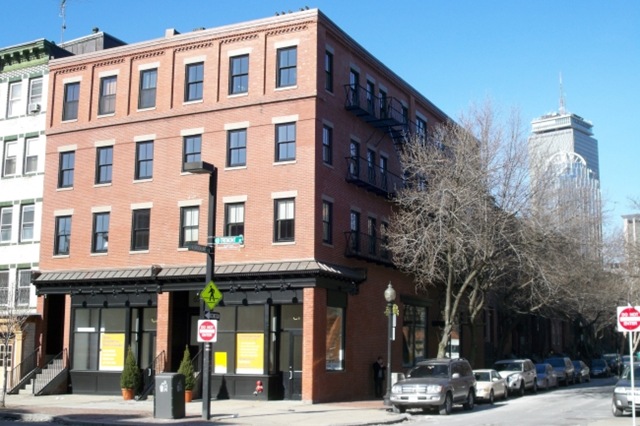
655 Tremont Street

Clarendon / Lawrence Parking Lot Development

Several blocks away from 655 Tremont Street, at the southeast corner of Clarendon and Lawrence Streets in the South End, a developer has taken a former parking lot, and is moving forward with a new construction building.  Such a project is reminiscent of 40 Worcester Street, also an empty South End corner lot until 2009 when a brand new 3-unit rowhouse was erected to fill the space.
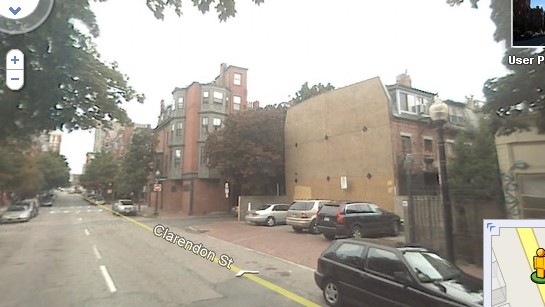
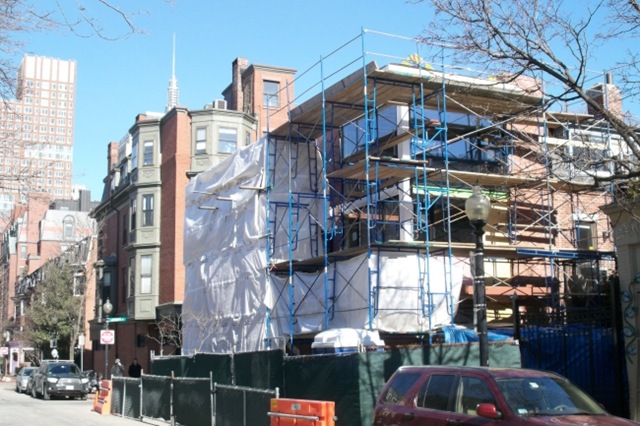
Original Empty Parking Lot at Clarendon & Lawrence

Current Construction at Clarendon & Lawrence South End

Forbes Predicts Boston Home Prices to Rise 19%

In a recent study conducted by Forbes Magazine, Boston was named the number one city to go from renting to buying.  The study looked at how the premium to buy (the spread between what you’d spend on renting and what you’d pay each month for a mortgage) has decreased across a number of cities, as well as economists prediction of significant home price increases over the next five years.

At the top of the list of cities where buyers should begin to buy is Boston, where economist predict that the home price index will increase by approximately 19% over the next 5 years.

  1. Boston
  2. Charlotte
  3. Chicago

The premium to buy figures are relatively straightforward, however, the home price index increase predictions are a function of the S&P/Case-Shiller Home Price Index, which does carry with it intricacies that are not entirely representative of the downtown Boston condo market (see
Debate Ensues over Case-Shiller Index).

258 Marlborough Street Open House

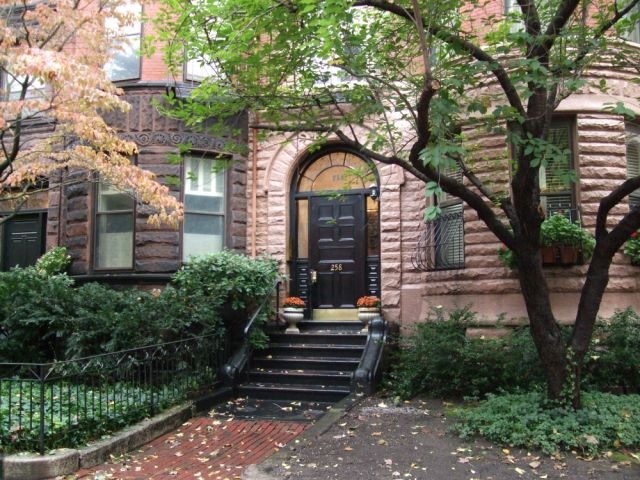
With close proximity to the Green and Orange T lines, Copley Square, Newbury Street shopping and the Esplanade, this beautiful (+/-) 1,420 square foot floor-through penthouse at 258 Marlborough Street with gleaming hardwood floors offers exceptional quality at a reasonable price: $965,000 ($679 per square foot).

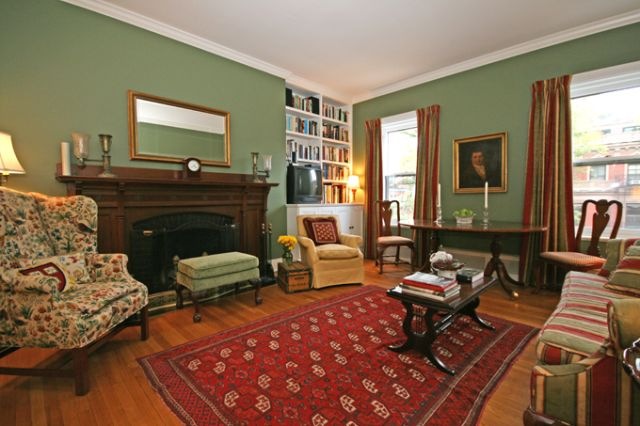
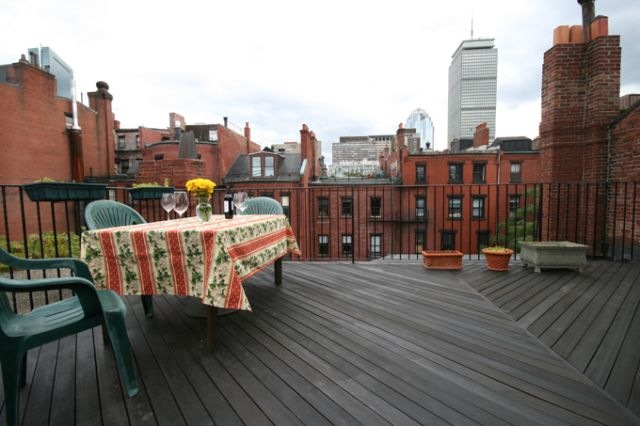
This unique, sunny, well maintained home in move-in condition boasts central air, an in-unit washer-dryer, chef’s kitchen, private storage, and two of each of the following: bedrooms, full baths, fireplaces, parlors – and head houses on the private roof deck with spectacular Back Bay views. Because the condo association is owner-managed, the low monthly condo fee of $492.00 includes heat and hot water plus a bonus common bicycle storage room. Quiet, picturesque, one-way Marlborough Street with its charming gas lanterns is among the most coveted streets in Boston.

An Open House will be held at 258 Marlborough Street on Sunday, January 24, 2010 from 1:00 PM to 3:00 PM, and every Sunday thereafter until the condo is sold.

258-marlborough-street-penthouse

258-marlborough-street-penthouse-living-room

258-marlborough-street-penthouse-roof-deck

Ultra Luxury Condo Sales Velocity Low

As the nation continues to rebound from the recession, it is perhaps no great surprise that Boston’s three latest ultra-luxury condo developments, 45 Province, the Clarendon Back Bay, and the Boston W Hotel & Condos, are struggling to drive sales velocity.  No condominium developer has a crystal ball, but those behind 45 Province, the Clarendon Back Bay, and the Boston W Hotel & Condos entered the market during an inopportune time in the natural ebb and flow of real estate cycles. 

While overbuilding in Boston proper is not the culprit, vacancy is, with paltry building percentage sold numbers, almost all of which under 10%, facing the three developments that have arguably set a new baseline for luxury living in downtown Boston and have been a positive addition to the neighborhoods they occupy.

Aside from Atlantic Wharf (formerly Russia Wharf), a Boston Properties development that is scheduled to come online sometime in 2011, that carries with it some projected residential component, large-scale condo development in downtown Boston is halted.  The inherent goal of the underlying real estate cycle is to now consume the available inventory in the market, and financiers and developers, of a certain size, will theoretically not re-enter Boston until they see vacancy levels significantly drop.

While 45 Province, the Clarendon Back Bay, and the Boston W Hotel & Condos have all been marketed for more than a year, the Clarendon and W Boston only recently received their certificate of occupancy and opened to residents, and thus, 45 Province has had somewhat of a head start on its rivals, yet, the percentage of units sold in each building (according to LINK, one of two Boston MLS systems) struggles to break 10%.  The current statistics for the three luxury condo developments include:

45 Province
Condos Sold: 15
Average Sales Price: $1,501,817
Median Sales Price: $1,304,000
Average Price per Square Foot: $1,008
Percentage of Building Sold: 15 / 138 = 11%

Clarendon Back Bay
Condos Sold: 9
Average Sales Price: $1,131,333
Median Sales Price: $1,060,000
Average Price per Square Foot: $1,063
Percentage of Building Sold: 9 / 103 = 9%

Boston W Hotel & Condos
Condos Sold: 8
Average Sales Price: $581,250
Median Sales Price: $560,000
Average Price per Square Foot: $807
Percentage of Building Sold: 8 / 123 = 7%

These three titans of luxury living face different challenges than other recently built large-scale Boston condo developments.  Take the Macallen Building, Boston’s first large-scale 140-unit LEED certified (green) condo development, located in South Boston, which had a relatively slow absorption rate given its price point and unique characteristics.  45 Province, the Clarendon Back Bay, and the Boston W Hotel & Condos face a different challenge than educating buyers on the merits of green living and why a South Boston development warrants a relatively high price point, instead, the baseline of luxury living is tangling with the economy and overall consumer confidence, regardless of price point, and regardless of how insulated downtown Boston is to pan-US economic conditions, it will simply take time to make significant strides forward in occupancy or building percentage sold rates.

45 Province Boston Condos
Clarendon Back Bay Condos
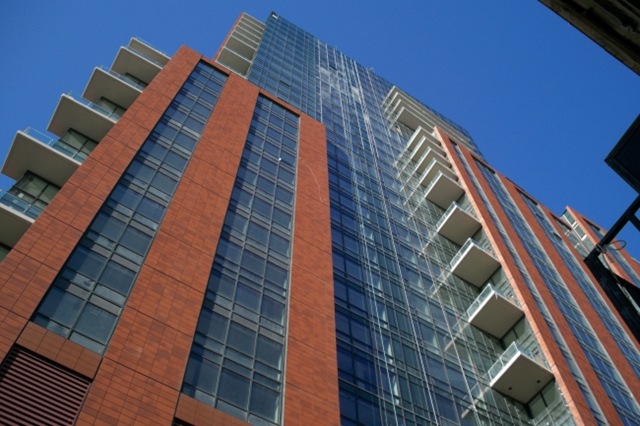
W Boston Condos

Overall Boston Property Taxes Up in 2010

Property tax rates in Boston reversed their downward trend for fiscal year 2010, moving from a 2009 tax rate of $10.63 per $1,000 of assessed value, up to $11.88 per $1,000 of assessed value.

On the whole, assessed values have remained either stable or decreased slightly in many neighborhoods, but with the approximate 12% increase in the tax rate, many homeowners will face larger property tax bills during fiscal year 2010.

Residents who maintain their Boston home as a primary residence will continue to qualify for a residential exemption.  The fiscal year 2010 residential exemption subtracts $125,090 from a property’s assessed value, saving qualified homeowners $1,486.07 on their tax bill.

For an example of how to calculate taxes for your condo, as well as a historical look at tax rates in Boston, visit our newly updated Boston property taxes article.

Bobby Quinn Becomes Contributor to Boston Real Estate Observer

Ecobroker certified, and currently with the Boston Brokerage Group, Bobby Quinn joins the Boston Real Estate Observer as a regular contributor.

With a special interest and expertise in green building and condo developments in the environmentally friendly space, Quinn is considered a “utility agent”, and does a little bit of everything, most recently taking over the property management division of the Boston Brokerage Group.  Quinn also has experience in Financial Services and real estate syndication.

The Boston Real Estate Observer continues to identify thought leaders and experts, such as Quinn, in various real estate related fields who serve as regular contributors to the publication in an effort to bring readers a comprehensive content portfolio. For more information on becoming a regular contributor to the Boston Real Estate Observer, contact us using the link at the top of this page.

2009 Downtown Boston Parking Spot Sales

The 2009 downtown Boston parking space sales numbers have been compiled, and year over year, while volume was down, average and median sales prices have remained stable.

According to LINK (one of two Boston MLS systems), the number of parking spaces that sold in downtown Boston during 2009 was 65, down from a 2008 volume of 97. Average sales price fell slightly to approximately $94,000, and median sales price rose slightly to $67,000.

2009 Boston Parking Space Sales Statistics:
Number Sold: 65
Average: $94,420
Median: $67,000
Average DOM: 132 days

2008 Boston Parking Space Sales Statistics:
Number Sold: 97
Average: $99,641
Median: $65,000
Average DOM: 136 days

The economics (i.e. supply and demand) behind parking spaces in the heart of the city continue to bolster the appeal and stature of owning a space outright, for those who simply need a place to park a vehicle either inside or out, or those looking to build a stable and diversified investment portfolio.

2010 is off to a quick start, with the latest Boston parking spot sale taking place at the Ritz Carlton (2 Avery Street) in Boston’s Midtown neighborhood – the space in the self-park secured Ritz Carlton garage sold for $88,000.

For more information on deeded parking spaces in Boston, see our comprehensive page of Boston parking space listings.

Top Stories of 2009

In 2009, the Boston Real Estate Observer continued to be one of the most popular real estate news sources in Boston.  We expanded news coverage beyond the residential market to include topics in commercial real estate, real estate law, rental markets, and lending markets in an effort to provide readers with a comprehensive view of the Boston market.  Additionally, we brought on five well known and respected real estate experts as contributors to the site to bring you news in their areas of expertise, and we look forward to the opportunity to bring on further contributors.  As we did in 2009, we plan to implement some innovative new ideas in 2010 to continue bringing readers robust and comprehensive coverage of the Boston real estate market.  Here are the top 10 most read articles from 2009:

  1. Boston Parking Spaces – our downtown Boston parking spots page continues to be a top destination for those who want to buy and/or sell a parking spot in Boston.
  2. The 1850 New South End Condo Development – along the southern border of the South End, a new loft-style condo development called the 1850 launched, we were one of the first to bring you exclusive photos and a comprehensive overview of the property.  The project then became one of a small handful of properties in downtown Boston that have been brought to the auction block over the past several years.
  3. 441 Stuart Street: What Happened? – Brecht Palombo provided in depth coverage of the foreclosure auction of a Back Bay building at 441 Stuart Street.
  4. Nouvelle at Natick Condo Auction – General Growth Properties placed a bet on creating a luxury condo living experience at the Natick Collection mall that backfired on them.  After declaring bankruptcy, the firm proceeded to try and sell off its position in the faltering condo development via an auction.
  5. The Clarendon Brings Unique Living to Back Bay – closings began at the ultra-luxury Clarendon Back Bay in December 2009, the building represents the only true high-rise living accommodations in the Back Bay.
  6. Disputing a Low Home Appraisal – with lending regulations changing in 2009, along with the underlying requirements around appraisals, this pointer to an informative article on how to dispute a low home appraisal was especially popular this year.
  7. Boston Property Taxes – many Bostonians saw a decrease in both their tax rate as well as assessed home value in 2009, which equates to a lower tax bill.  The residential exemption has decreased in value, perhaps an effort by the City to maintain their tax base.
  8. Nothing Standard About Standard Purchase and Sale Agreement – in addition to breaking news, the Boston Real Estate Observer features a swath of informative articles covering real estate basics, our article about the standard P&S agreement has gained significant popularity.
  9. Boston W Hotel and Condos – we’ve brought you coverage of the Boston W since project inception, providing some of the most exclusive photos and news about the development as it moved through construction to the hotel opening earlier this year and its most recent condo closings in December 2009.
  10. FP3 Seaport District Condos Slow to Sell – while the latest Seaport District condo development, FP3, began with an extremely slow sales velocity, it has picked up steam during 2009, with currently 35 units in the building recorded as sold (per LINK).

We look forward to another exciting year in Boston real estate, and a whole new set of top 10 articles in 2010.  Happy New Year!

New Ultra Luxury Baseline

After several years of construction, and a redefining of multiple blocks of downtown Boston, both the Boston W Condos and the Clarendon Back Bay began closing on units located on lower floors of each building earlier this month.  The W and Clarendon join the Mandarin Oriental, 45 Province, and Battery Wharf as the newest flock of ultra-luxury large scale Boston condominium developments that were delivered in late 2008 and 2009.

Sales figures for both the W Boston and Clarendon Back Bay have been kept relatively quiet during pre-construction and finishing, and as time unfolds and the registry of deeds is updated, Bostonians will begin to see what price points are being paid to inhabit Boston’s latest luxury living accommodations.

What can be seen thus far, with approximately 5 units in each development being recorded as sold, is that average price points at a price per square foot level in the W and Clarendon at $820 and $990 respectively are significantly lower than the Mandarin Oriental fetched, and well off the average of units currently advertised in each building of $1,090 and $1,150 respectively.

Comparing early sales with other fully sold out buildings (such as the Mandarin) or other currently available units in the same building, may not be a fair comparison given that the majority of units recorded in each building thus far have been on lower floors of each development.  It has been relatively standard that prices typically rise $15K-$20K per floor as you climb towards the penthouse of a large-scale condo development.

With the sudden boost in market closing activity due to closings at the W Boston and Clarendon Back Bay during December 2009, and further closings expected during January, those watching statistics of the Boston condo market over the next several months should look at the numbers knowing that averages can be significantly and easily impacted by injecting just a few high-end price points into a sample.

Debate Ensues over Case-Shiller Index

LINK, one of the two MLS systems that serve the Boston market, routinely holds a lecture series for its members and guests that cover a wide range of real estate related topics.  The most recent lecture took place at the ultra-luxury Mandarin Oriental in Boston’s Back Bay.  The keynote speaker was Karl Case, one of the founders of the Standard & Poor’s Case-Shiller Home Price Indices, which measure the residential housing market, tracking changes in the value of the residential real estate market in 20 metropolitan regions across the United States.

In essence, the index covers homes that have resold, typically in suburban markets, but does not include condos or new construction sales (only repeat sales).  As Karl Case opened the microphone up for questions following his keynote address, local broker Kevin Ahearn raised the concern that Case’s index does not reflect downtown Boston, as the index does not include condos (the overwhelming majority of downtown Boston’s housing stock) nor new construction sales.  Following the session, Case was quoted as saying that Ahearn “simply doesn’t like anybody who says prices go down – and I say they have”.

It’s rather difficult to take a national or regional trends pitch into the heart of downtown Boston, and while Case suggested that 2010 would be a good year, members of the audience appreciated the message, but realized that the debate highlights the hyper-local nature of real estate, and the potential dangers of aggregating data and drawing conclusions about a local market from regional or national data trends that do not capture  its local nuances.

LINK founder Debra Taylor Blair said the (downtown) Boston condominium market has fared much better than suburban single0family home sales (the latter being what the Case-Shiller index tracks).