Starting Smart in Commercial Real Estate Development

Image: Freepik

Breaking into the world of commercial real estate development isn’t just about suits, skyscrapers, and glossy pitch decks. It’s a grind, a hustle, and often, a long game of balancing financial savvy with street-level instincts. Before you ever buy a plot of land or pitch your first project, there’s a mountain of prep that separates the hopeful from the successful. If you’re serious about diving into this complex and high-stakes industry, there are several things you’ll need to get right from day one — or even before day one.

Know the Landscape, Not Just the Lingo

You can’t navigate a space you don’t understand, and commercial real estate comes with its own language, its own rhythms, and a network of unspoken rules. Before you chase the big money, you’ve got to get grounded in how deals actually work — not just from podcasts and textbooks, but from shadowing pros and seeing real negotiations play out. There’s nuance in everything, from zoning laws to lease structures, and that knowledge only gets sharp with immersion. So read, yes, but more importantly, watch and listen where the action is really happening.

Get Real About Your Financial Foundation

Before you build anything physical, you’ll need to build your own financial infrastructure — and that doesn’t just mean having some savings. This industry demands you to understand risk capital, debt structures, investor returns, and how to keep projects cash-flow positive through every stage. You’re not playing with Monopoly money here; lenders and investors are watching how you think, plan, and execute. The sharper you are with your own finances, the more confident others will be handing you theirs.

Seek Out a Mentor

There’s no spreadsheet formula that can replace what a seasoned mentor can teach you. The commercial side of real estate development isn’t just numbers — it’s negotiation, timing, relationships, and gut calls that no Excel model can predict. Finding someone who’s been through market downturns, bad deals, and tough entitlements can help you sidestep early mistakes that could take years to recover from. Don’t chase the most popular name in your network — look for the person who’ll be brutally honest and actually has the receipts.

Understand That Deals Start with Dirt

Too many people jump into this field thinking only about buildings, but real developers know that everything starts with the land — and land use is where the game really begins. If you don’t understand zoning codes, use permits, environmental studies, and community plans, you’re flying blind. A great piece of land in the wrong jurisdiction can be a financial sinkhole. Get familiar with how cities think, how planners operate, and how the politics of place shape what gets built.

Build a Network Before You Need It

Commercial real estate is a team sport played by people who often work behind closed doors. You’re going to need brokers, architects, engineers, attorneys, capital partners, and maybe even political allies — and you can’t just Google these people the week your first deal is supposed to close. Start building real relationships now, with no agenda other than learning and adding value where you can. People remember who showed up early, not just who needed something later.

Decide What Lane You’re Actually In

Real estate development isn’t one job — it’s a stack of roles layered across finance, design, politics, and operations. You might be more inclined toward sourcing deals and structuring capital stacks, or you could find your talent lies in community outreach or navigating the entitlement maze. Don’t try to be good at everything — it’s better to be great in one lane and partner with those who complement your gaps. The quicker you know your role, the faster you’ll make meaningful contributions on real projects.

Put It in Writing

No matter how confident you are in a handshake or verbal agreement, nothing replaces the clarity and protection of well-drafted contracts when dealing with clients and contractors. These documents define scope, timelines, payment structures, and accountability — and when done right, they prevent misunderstandings that could tank an entire project. Saving these agreements as PDFs ensures they’re secure, easy to share, and won’t be accidentally altered. When adjustments are needed down the line, the role of a PDF editor comes into play, letting you update terms directly in the original file without converting it to another format.

Respect the Timeline, Not Just the Payday

It’s easy to romanticize the payoff of a successful development, but the timeline between concept and completion is long, uncertain, and full of pivots. From environmental reviews to community hearings to construction delays, things rarely move quickly. If you’re in it just to make a quick buck, you’ll probably tap out before the real returns come in. What separates the lifers from the dabblers is patience, resilience, and an ability to keep the long view when the short term gets messy.

Never Underestimate the Politics

Every commercial development is, in some way, a political act. You’re reshaping a neighborhood, shifting traffic patterns, influencing local economies — and that means city councils, neighborhood groups, and advocacy organizations will all want a say. Developers who don’t respect that process often find themselves blocked, stalled, or spending money fighting battles they didn’t see coming. Learning how to communicate with communities, how to respond to real concerns, and how to align your project with a broader civic story is a skill as important as reading a pro forma.

If there’s one thing you need to internalize before jumping into commercial real estate development, it’s that preparation is more than studying; it’s about positioning yourself strategically. You’re entering a field where opportunity often looks like risk, and clarity can come too late if you’re not already thinking five steps ahead. You’ll need to invest in relationships, study patterns, own your blind spots, and be honest about what kind of developer you really want to be. When you treat your pre-game with the same intensity as a groundbreaking ceremony, you’re not just preparing — you’re already building.
Weekly Thoughts of Keith Munsell

Going ‘green’ is here to stay. The environment in which we live, work, shop and play has forever changed. This has a lasting effect on the way we design and construct buildings. Not just the materials used in construction, but how they are used, how materials are disposed of and how the environment is sustained. You see this at Russia Wharf (now called Atlantic Wharf) along Boston’s Waterfront and The Weston Corporate Center in Weston (both projects currently under construction, the latter poised to be delivered, by Boston Properties) and will see this in the Liberty Mutual Insurance expansion. The question has always been how much more will this cost, but maybe the right question is how much will this cost if we don’t do this.

The Boston local commercial markets, despite some positive news out of both the Seaport District in newly signed leases for almost 100,000 square feet and the Fenway area (near and dear to my BU heart) with the beginning of permitting for new major retailers continues to be stressed. Recently Waltham’s Bay Colony, one of Broadway Partners acquisitions in 2007 is handing the keys to the complex back to Prudential Financial.

Though there is money on the sidelines to purchase properties like Bay Colony, the question still revolves around pricing, with few data points, declining rent and increasing vacancies. As the front page of a recent Boston Business Journal article stated ‘Commercial RE: Things are less Bad’.

Congress and the general public (those that are informed) are questioning if we should, and at what price, continue with taxpayer support to prop up secondary market giants Fannie Mae and Freddie Mac. This cost may well exceed $400B. The generally accepted rational for their existence is that they make homeownership more affordable and that because they buy and then package loans they make the secondary market possible while deflecting risk from the banks to the banks and investors. Before you throw out the baby with the bath water remember that they hold, in some form, $5.5T of mortgages.

As the homeowner tax credit is about to expire at the end of June, the question is how much support has this given the housing industry? Recent new home permit applications were up, though at about 60% of their ‘normal’ level. Home prices and sales activity were up in many communities though the National median price fell by about 1%; existing home sales are approaching 85% of ‘normal’ activity. Will this continue? Despite record low interest rates I believe that the lack of credit incentive will put a damper on the resurgent housing market.

The underpinnings of my foreboding on both the commercial market and the residential market remain anemic job growth. Without an expanding employment base both the business community and the consumer will remain reticent to expand/spend. Millions of jobs lost in the recession may be gone forever. Though there has been an uptick in consumer spending, the loss of home equity and retirement funds will make this resurgence short lived.

What’s the good news, the good news is that there is less bad news than before. Things seem to be getting worse at a declining rate.

Munsell's January '10 Thoughts on Real Estate

Boston Area 2009 commercial sales are off by approximately 90% as compared with the market peak. I expect to see more sales activity (not higher prices) only if sellers get more realistic, lenders dump properties on the market, and money sitting on the sidelines decides that  the investment makes sense from a CF prospective or that they think the market has bottomed out.

Boston-area housing sales will continue to be slow as most pent up demand for first time homebuyers was satisfied last year with fulfillment of the tax credit buyer program (thought to expire and then renewed through the Spring of 2010).  Nationwide sales, which had rebounded, fell from October to November by 16%.

Consumer borrowing continued to decline for the tenth straight month as borrowers continue to be nervous about employment and as they try to re-fund depleted investments.   Not helping was the most recent employment figures, which showed that the economy continues to shed jobs, this past month to the tune of 85,000 more jobs.

One of my favorite metrics did show signs of life as the Institute of Supply Management’s service index rose to just over 50, signifying expected growth in the service sector.

In November, business added some 52,000 temporary jobs, a forerunner of full time employment .

The Boston-area jobs outlook continues to be somewhat dim as some are projecting another 30,000 job loss.  This will depress the Consumer Confidence index as well as continue to expand the office vacancy rate already approaching 20%.  Nationwide, we have lost more than 7.2 million jobs.  The light at the end of the tunnel here is that temporary employment has grown and hours worked has stabilized; usually precursors  to permanent job growth.

Developers continue to pull out of projects, the latest in a string of pull outs is the developer for the South Station Postal Annex site in South Boston.  Could it be that lack of tenants and funding had any effect?

Deficits will try US ability to sell debt resulting in an increase in interest rates and further depressing both the housing and commercial real estate markets.

The major Banks have mostly repaid their TARP funds, although the bad news here is the community banks have not and their exposure to commercial and development real estate is a far more significant portion of their loan portfolio.

Tufts Dental Completes Construction

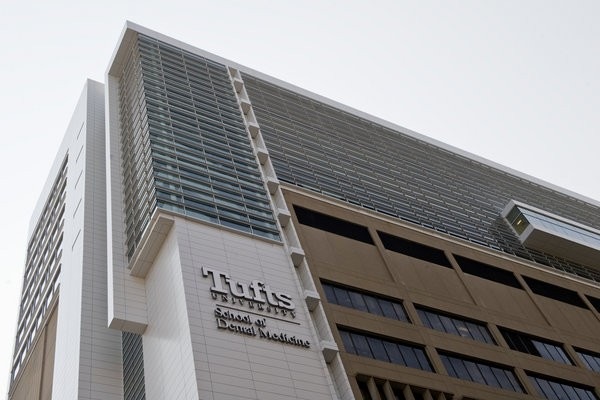
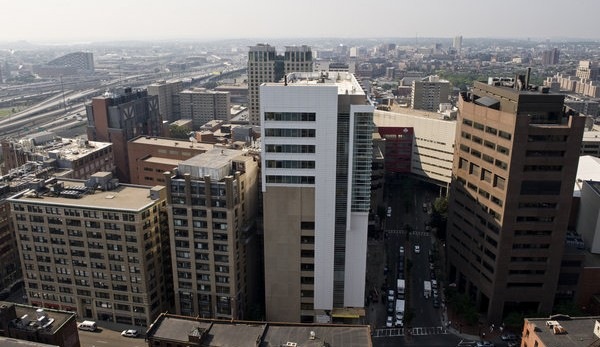
Following approximately 1.5 years of construction, Tufts Dental School recently completed its vertical expansion project, adding 5 floors and approximately 95,000 square feet to the downtown Boston location. The new space expands Tufts’ patient clinics, classrooms, offices, and Continuing Education and research facilities.

November 20, 2009 marked the dedication and grand opening of the redeveloped building, located on the edge of Boston’s Chinatown neighborhood.  The development effort, launched in April 2008, was funded mainly through private donations of alumni.

In the face of a difficult commercial real estate market, Tufts Dental School is able to fund and complete a major construction project largely because of its ability to diversify revenue generation across three separate and distinct activities – the school draws donations from alumni, collects tuition from students of its four year DMD program, and generates revenue from its internal clinic staffed by students, which serves more than 20,000 patients each year on a for-fee basis.

Tufts Dental School Boston

Tufts Dental School Vertical Expansion Project

Commercial Real Estate Market to Bottom in 2012

After gorging on cheap capital and overleveraging in the mid-2000s, the commercial real estate market will hit bottom sometime in 2012. There will be an oncoming tsunami of defaults and foreclosures because of an inability to restructure debt along with declining occupancies and rental income.

To date, the government has propped up lenders with huge infusions of cheap taxpayer money, which has kept the institutions solvent (this highlights the concept of “extend and pretend”, which is more commonplace in today’s market), but has not had the effect of either loosening lending or correcting the problems. Eventually the banks and the Special Servicers (CMBS market) will have to jettison their portfolios, increasing the supply of available product while at the same time further depressing prices.

And the timing could not be worse, as many of the 400 or so banks on the government’s ‘watch list’ will become insolvent dumping their assets at auction prices. Add to the above equation the inability to obtain borrowed money at anywhere reasonable loan-to-value ratios and the lack of a replacement market for the moribund $200B a year CMBS market and you have the ‘perfect storm’.

Did I mention job growth – no, as there will not be any anytime in the near future? I am always intrigued by hearing about our ‘jobless recovery’ if it is in fact a recovery at all; as what recovery isn’t jobless? Doesn’t industry gain business before hiring employees and to date we have not been gaining much business. When we do, first you will see a growth in average hours worked per week, then you will see an increase in temporary employment and finally a growth in permanent jobs as business feels comfortable that their growth was not an anomaly, but truly an economic turnaround.

So what is the good news – there isn’t any.

What should investors do if interested in commercial real estate acquisitions – wait.

The Future of Commercial Real Estate

At the annual New England CCIM Chapter meeting in Burlington last week, I had the opportunity to present a discussion on the future of commercial real estate values.  The following executive summary attempts to provide some color to the Commercial Property’s Future presentation (37 KB PDF) that I prepared for the event.

I noted that all recoveries are really jobless as industry gains business and then hires as opposed to hiring and then hoping for more business.  Ultimately, the employment environment trickles through all sectors of commercial real estate – depressing values.

The increased savings rate, while overall good for the economy in the long run, currently takes billions of dollars out of the economy which otherwise might have been spent on consumer goods and services (70% of our economy).  This along with job loss and employee angst will keep a lid on retail sales.

A bright spot is that retailers and manufactures are keeping their inventory low and shortly will have to restock – meaning an increase in manufacturing and distribution with a positive effect in demand for warehouse space.  However, if the economy has not picked up by then this may be a short lived increased demand.

The mantra in the financial sectors has been ‘extend and pretend‘ – kick the can down the road.  If we don’t mark our borrower’s assets to market then we don’t have to recognize a decline in value and a technical default (even if they are paying) as the loan to values (LTV) are too high, the debt coverage is not there, and many of the mortgage covenants have been broken.  However, this extend and pretend behavior cannot go on forever, and when the market values are reported, commercial loans will have even more problems as borrowers will not be able to refinance existing debt and will have to either kick in more equity and/or pay down the loan.  What lenders will step into this void?

The landlord’s Catch 22 (after the Joseph Heller novel about trying to get out of the service by saying you are crazy, but if you know you are crazy then you can’t be) for those attempting to develop is that the landlord needs signed leases to get a loan, but the tenant needs the assurance that the project will go forward as evidenced by a loan in place before they are willing to commit to a project.  Which comes first the chicken or the egg?

My predictions as to value, peak to trough are for Boston: Homes -25%; Retail -40%; Industrial -40%; Office -35% and Lodging -55%.  Nationwide, I see home prices declining even further unless the administration extends the home buyer programs (which just recently made it through the Senate and House) in some form and commercial office real estate declining further due to depressed rents and economic uncertainty.  At a national level, homes -35% and office -45%, while the remainder of the segments are in line with Boston.

The Slow Sucking Sound is Commercial Real Estate

I’ve had to rewrite my introductory paragraph three times in an attempt to not sound like a raging Chicken Little, but I must say this succinctly:

Commercial real estate, construction, and multifamily properties and projects are in a world of hurt. It is going to get worse. If there is any question as to value today simply rip the band-aid off quickly and take the pain.

There I said it. Indulge me for a few moments if you would. If you know anything about commercial real estate you probably know that values rest largely on three factors.

  1. Demand: How much more is one guy willing to pay than the next. In commercial real estate this is expressed as a cap rate generally. Cap rates are inversely proportional to value. Think of them as interest rates or simply rates of return. It’s the same as any other investment in that the cap rate speaks to the perceived risk in the location, asset type, tenant mix, etc.
  2. Building Fundamentals: How much money is coming? How strong are your tenants? How likely are you to keep the income? What upside is there? How desirable is the location?
  3. Leverage: To what degree is positive leverage available?

I’m sure I’ll get a slew of comments deriding me as simple or slow, but these factors are at the core of value; so let’s break it down. Demand from an acquisition standpoint is WAY off. I recently ran a survey of commercial real estate professionals, 200+ responded and investors believed cap rates would rise by 2.3% over the coming year. I’ll show you the math on this in a minute. That means that if you would buy at 7.5% today you’re putting that same property at 9.8% next year. Don’t fall asleep on me yet, this is going to get interesting, I promise.

Building fundamentals have mainly to do with who is renting your property and for how much. Across the board we are seeing reductions in rent by 20% and more. We negotiated, for ourselves, a rent reduction of more than 20%. Add to this increased vacancy and you can see where I’m going with point number two.

Leverage… suffice it to say that leverage has to do with the availability of borrowed capital, usually from banks or in the case of commercial real estate the CMBS market. If you haven’t been under a rock you know what I’m going to say.

Ready? Here’s the math. I was on a recent conference call where analysts at costar were answering the question “Is a 40-50% drop in values really real or is that some kind of inefficient market blip because the banks aren’t lending?” and their response was the question should be “Is a 75% loss of value really real?” …. that is what we’re talking about.

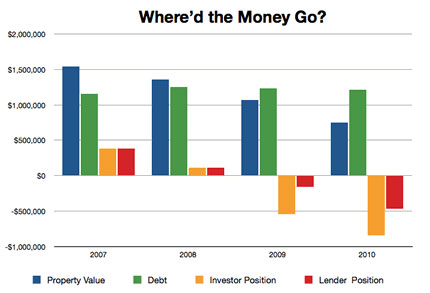
Check out the accompanying graph below to understand where commercial property values are going. This model uses a property that sold in 2007 with at a 6.5% cap rate, with a 75% LTV, on a 25-year amortization schedule with a 7% rate. It assumes the aforementioned cap rate decompression and a slow (5% after the first year then 10% in each of the 2 subsequent years, totally realistic) drop in NOI as a result of lower rental rates and higher vacancy.

Losing Money in Commercial Real Estate

Stay tuned for my follow up article where I’ll tell you the shocking truth about what’s happening at the banks right now and why it is going to result in a cascade of distressed commercial real estate opportunities coming to market and a slew of bank closures. I’ll tell you who the culprits are and what can be done.