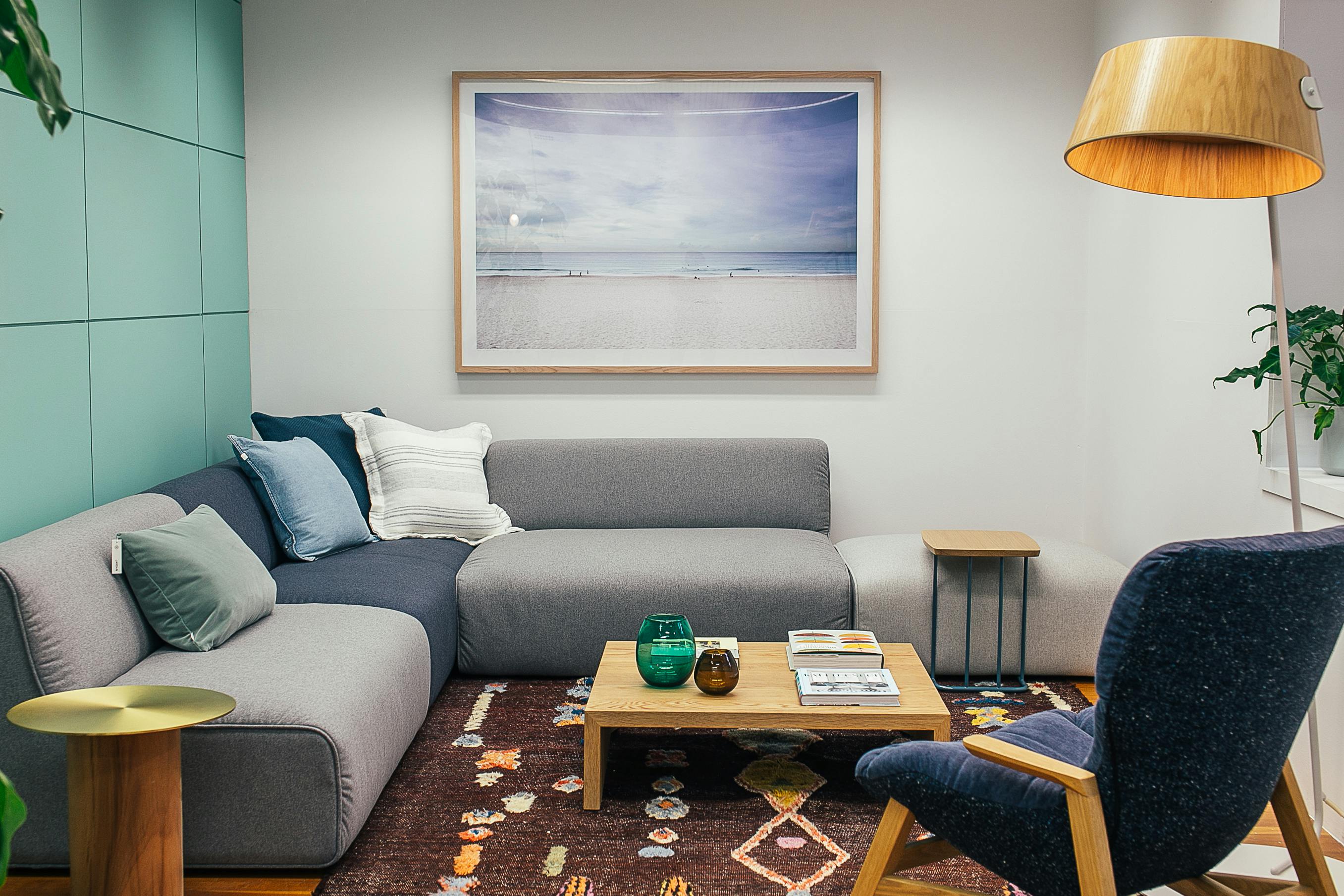
There are seasons when your home doesn’t just feel outdated — it feels like it’s resisting you. The light feels off. The space nags. The corners seem heavier than they should. Refreshing your home doesn’t have to mean tearing out walls or buying new furniture. It starts with noticing what’s no longer helping you breathe. It’s about peeling back layers of habit until your home can exhale again — and you with it.
Start with lighting that changes your body before your mind
Too often, we forget that our nervous systems respond to light long before our thoughts do. Soft warm lighting reduces cortisol levels and helps reset the body’s stress rhythm after a long day. Harsh overhead bulbs, flickering fluorescents, mismatched temperatures — they jar the body out of rest. The difference is immediate. It’s not about brightness. It’s about where the light hits and how it feels. Table lamps, dimmers, and smart bulbs that shift tone with the hour can completely change how a room holds you.
Don’t just upgrade — protect what you rely on
Home refreshes usually stop at the surface — new rug, new blinds, maybe a coat of paint. But deeper comfort often comes from knowing your home won’t surprise you in the worst way. Systems break. Appliances wear down. And when they do, the stress can undo every cozy corner you’ve created. If you’ve never looked into warranty coverage for those invisible essentials, here’s a good one. Sometimes peace of mind isn’t a mood — it’s a contingency.
Use daylight as design — not just a utility
Open the blinds, move the plant, and stand where the light touches you. You’ll find that being near a window or skylight has measurable emotional effects — being in natural light improves mood and increases happiness. Rearranging your space to chase that light — be it your work desk or the dinner table — isn’t frivolous. It’s foundational. A window’s exposure isn’t just a fact; it’s a feature. And when that light is uninterrupted by clutter or poor layout, your home starts to breathe in sync with you.
Create space that respects your movement, not just your furniture
Some rooms seem fine — until you try to move through them. If you’re turning sideways to get around chairs, dodging sharp corners, or bumping into end tables just to reach a light switch, your space is resisting you. A better flow often starts with arranging furniture to allow smooth movement and clarifying the primary walkways. A well-placed chair can redirect the entire mood of a room. You’re not arranging for symmetry; you’re arranging for ease. That’s when the room starts working with you instead of against you.
Design lighting around emotion, not function
Rooms don’t need to be fully lit all the time. In fact, they shouldn’t be. Place accent lighting where the eye naturally rests — behind a plant, near a reading chair, under kitchen cabinets. Use it to invite slowing down. To soften a hallway. To remind you that the day is over. Emotional home lighting environment design adapts moods and helps you shift from alertness to calm without noticing.
Balance the colors that anchor your senses
We talk about color schemes, but few homes actually use them as a way to support the nervous system. Saturated hues can invigorate, but they can also exhaust. Whites open space but can also flatten warmth. When you’re rethinking paint or textiles, try pulling from deeper models — these five elements help balance mood naturally, providing a psychological rhythm. A splash of water blues in a high-tension room. Earth tones near doorways. A bit of metal near the desk. You’re not decorating — you’re recalibrating the energy that holds you.
Clear the static that builds where clutter hides
There’s a certain hum that clutter emits. It’s not always loud, but it’s constant. That chair in the corner piled with mail. The drawer that won’t shut. The cabinet you avoid opening. Clutter can increase stress levels, especially in places where your attention should be shifting — like kitchens, bedrooms, or transition spaces. You don’t need to go minimalist — but you do need to reclaim your surfaces. The goal isn’t tidiness — it’s quiet. The kind that comes when objects no longer argue with each other.
Refreshing your home doesn’t start with spending — it starts with attention. With listening to what your rooms are telling you. With sensing where tension accumulates and asking what small shifts would let the space soften. Maybe it’s moving a chair. Maybe it’s opening a blind. Maybe it’s fixing something that’s been broken for too long. But whatever you do, start small. Start with rhythm. Let your home speak back. And if you listen long enough, you’ll hear what it’s been trying to give you all along.


 Keith Munsell