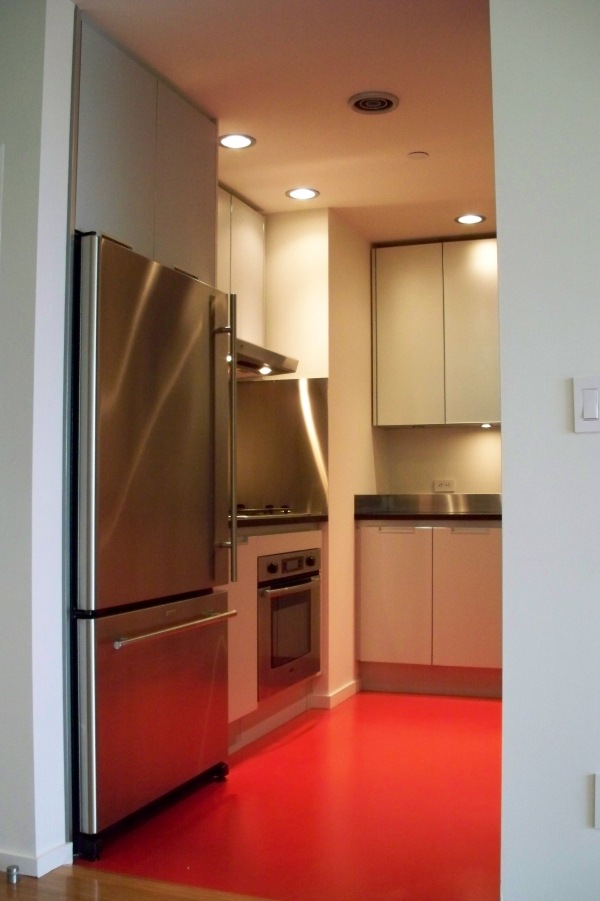
First Resale at the Modern

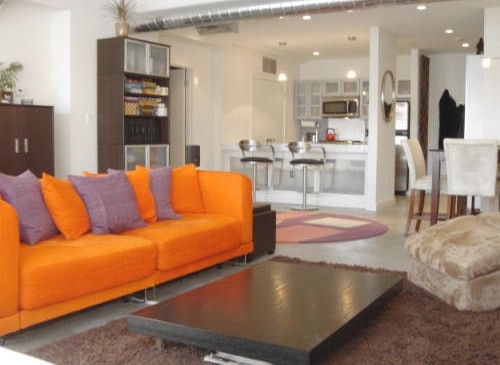
Following the last closing at the Modern, a 25-unit condo development that opened in 2007, that took place in August 2008, Buyer are only now seeing the first resale condo available for sale in the building.  Unit 203, a 1,000 square foot one-bedroom one-bathroom unit was listed for sale in late January 2009, and recently underwent a $10,000 price reduction, bringing its list price to $479,000 (approximately $479 per square foot).

The unit is well equipped, with some additional upgrades, including a Bosch washer / dryer, custom Hunter Douglas blinds, custom closet system, small private terrace, and one garage parking space.  The Seller is offering six months of condo fees as an incentive to purchase, which equates to a $1,455 credit at the closing table.

Perhaps the one negative aspect to the south-facing unit (see floorplan 147 KB PDF) is that it overlooks the adjacent gas station.  The building itself is elevator-served, has a large common roofdeck, and there are still plans on the table to do a second phase of the development sometime in the future.
Modern South End 203

Clarendon Back Bay Condo Photos

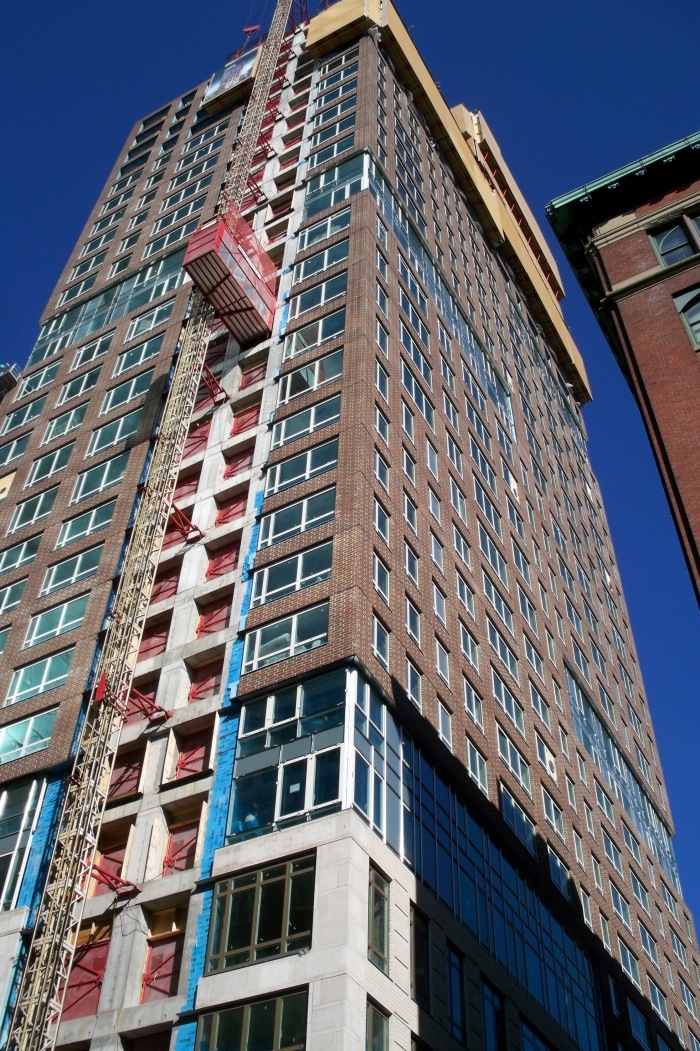
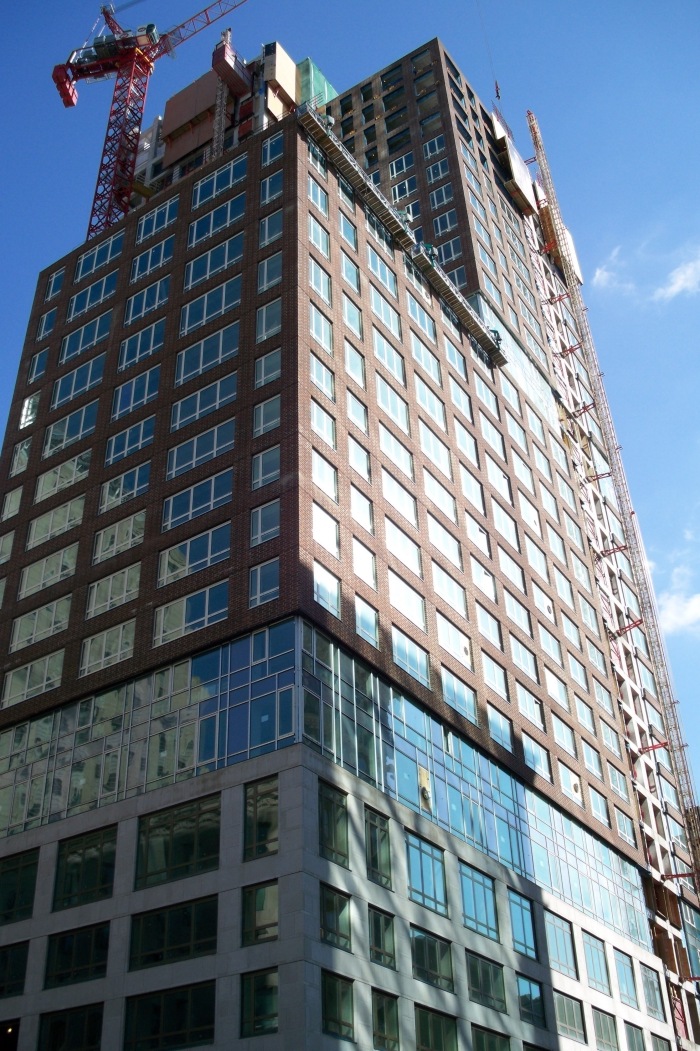
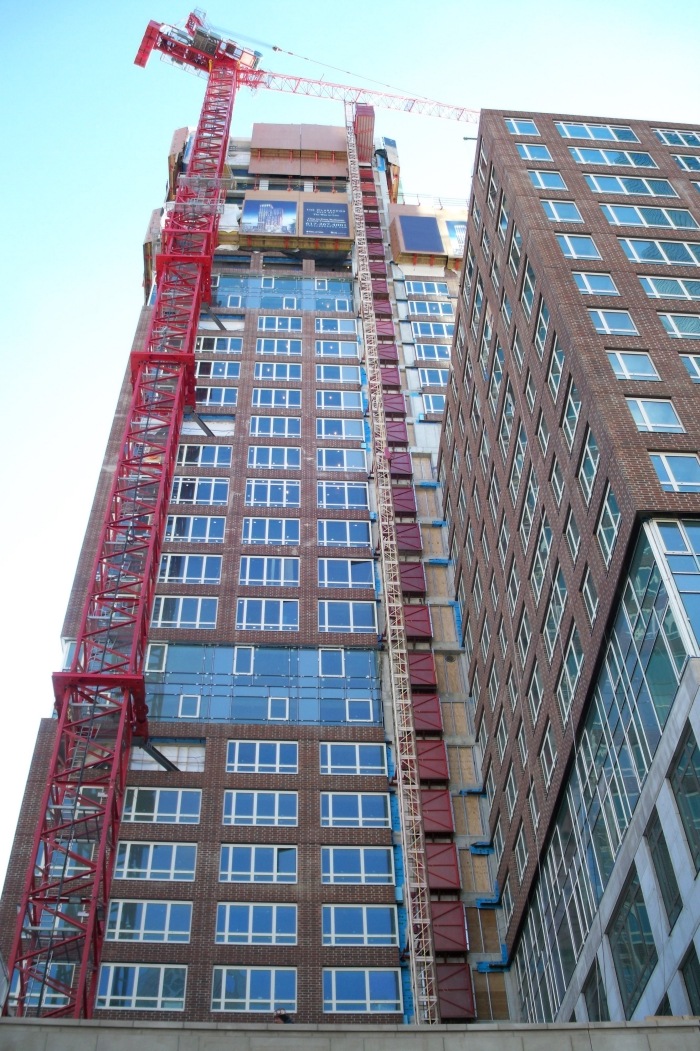
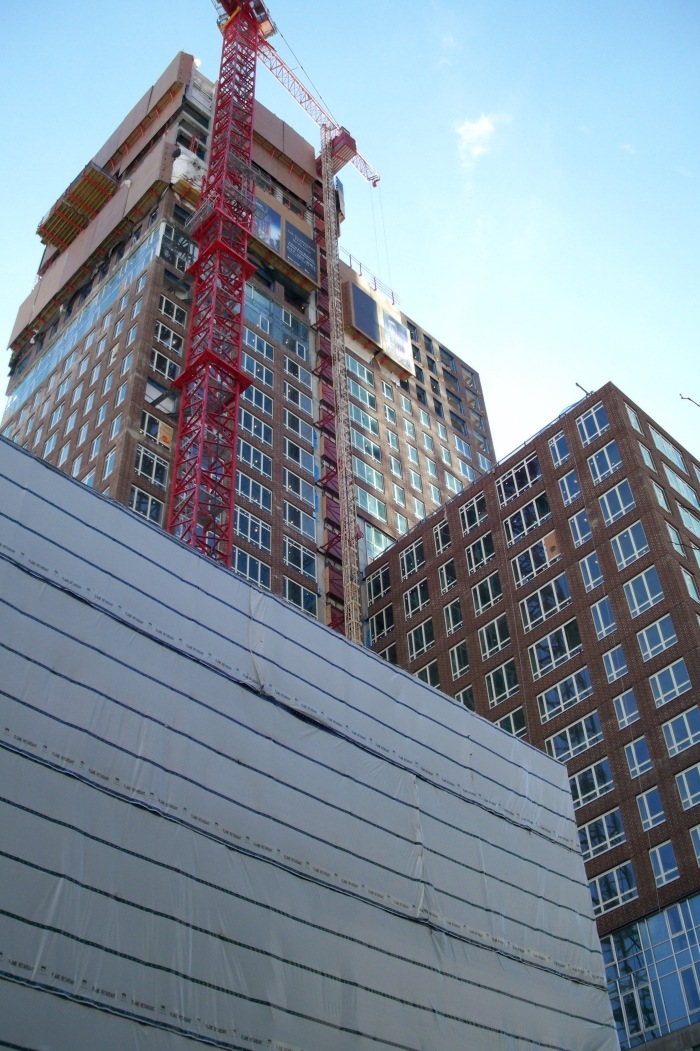
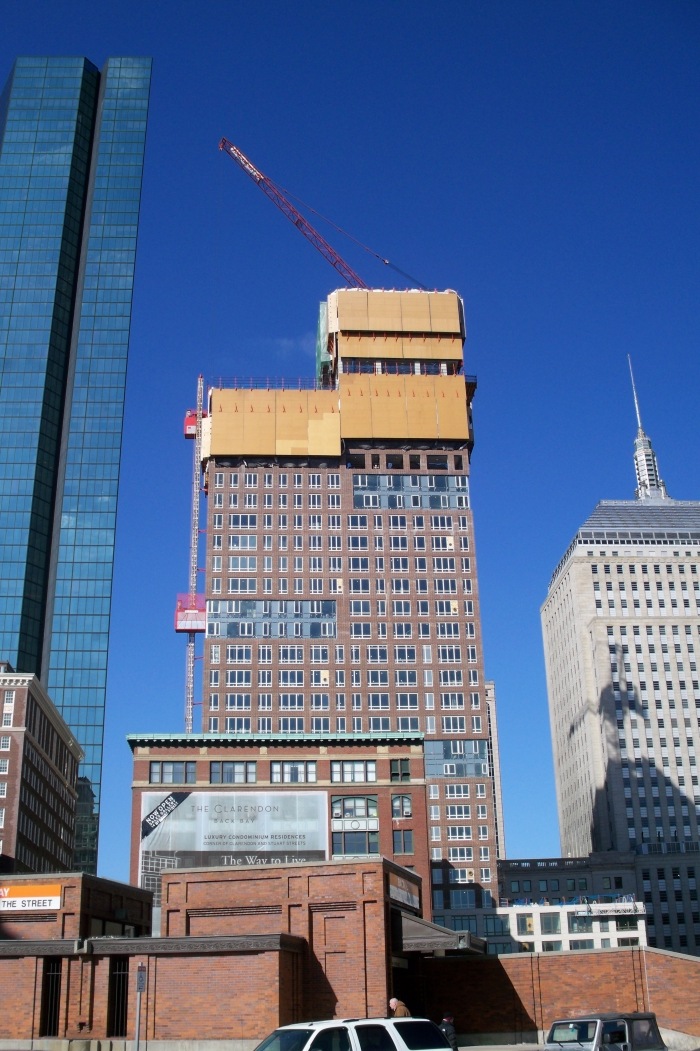
To the surprise of many working in the John Hancock Tower, the Clarendon Back Bay has shot out of the ground to quickly become the building’s tallest adjacent neighbor.  It is estimated that approximately 15 of the 104 condos in the development slated for a late 2009 opening are Under Agreement.  Pricing for studios at the Clarendon Boston begins at $695,000, and goes well past $5 million for the highest floors in the building known as “the tower”.  View a sample of listings (PDF 210 KB) for more further information.

Readers have been requesting updated photos of construction at the Clarendon, and we have these exclusive photos to share with you.

Clarendon Boston

Clarendon Boston

Clarendon Boston

Clarendon Boston

Clarendon Boston

Cambridge One First Condominiums

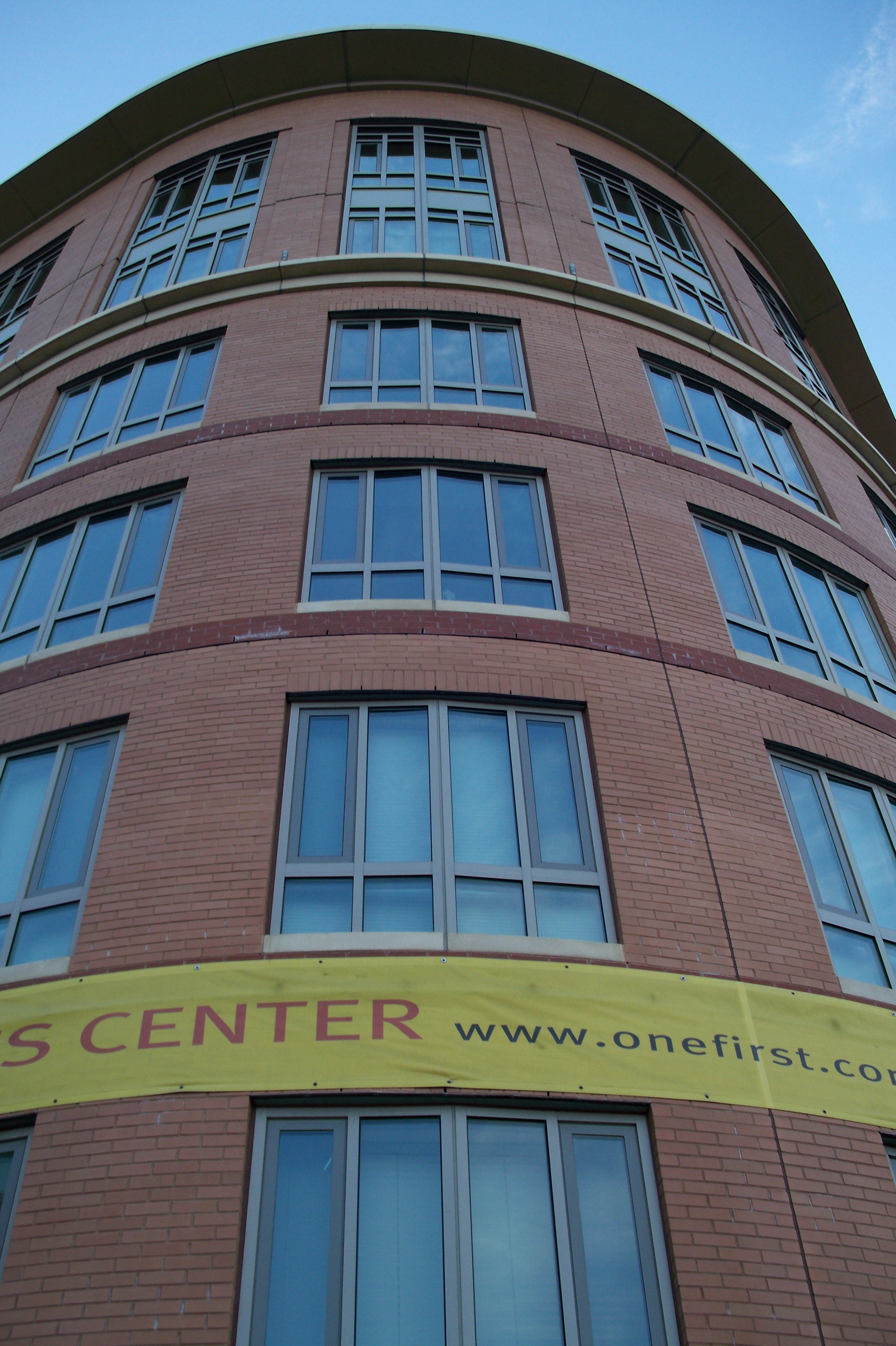
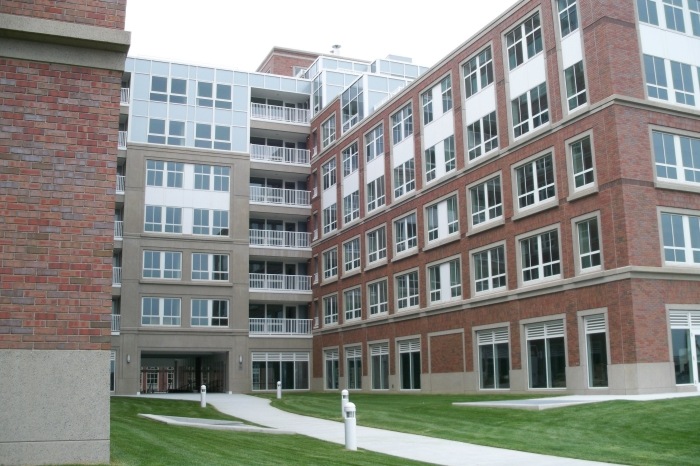
One of the most robust and architecturally unique condo developments that Boston has seen in some time is actually not in Boston, but just north, across the Charles River in (East) Cambridge.  The One First condominium development is composed of five (5) separate and distinct buildings tied together by a landscaped private courtyard.  A majority of the units are south-facing, which provides great light all day long, and the melding of different living styles, from duplexes to entire floors in one of the Otis Street buildings, makes One First living unique.

The way in which the development is laid out, its interconnectedness specifically, creates a community feel with individual spaces.  Residents are moments from Green Line T access at Lechmere station, and practically adjacent to the CambridgeSide Galleria shopping mall.

The main lobby of One First sits at 150 Cambridge Street.  While each of the five buildings has its own separate entrance and lobby with mail service, the 24/7 concierge operates out of the main lobby, and is intimately connected with the remainder of the development’s buildings.  Similar to Boston condo developments like One Charles, One First makes use of a rather new technology called Building Link.  Building Link is an Internet-based system that manages all day-to-day communications, record-keeping and task tracking between occupants, building staff and property managers in residential buildings.

Cambridge One First Condominiums

The One First development consists of 196 residences, as well as 4 commercial spaces.  Approximately 148 of the condos in the development have sold (76%), and two of the commercial spaces are leased.  The condo development is currently two unit sales away from the developer handing over control of the HOA to residents.

HOA fees are approximately $0.60 per square foot, and support amenities that are becoming standard in Boston, but not entirely ubiquitous, including wireless Internet in the common areas, a library and screening room for resident use, common roof deck adorned with approximately $58,000 of teak furniture, small fitness center, 24-hour concierge, garage parking, and a well maintained and landscaped set of grounds and common areas.  Perhaps the only thing lacking in the units themselves are a Washer / Dryer included, hookups are available in each unit, however.

Parking and additional storage are amenities that are expected and an added bonus respectively.  The One First parking garage boasts 180+ parking spaces, mainly in the underground elevator-served garage, as well as a handful of spaces in the north end of the courtyard.  The development also has 40 storage units that offer residents an additional refuge to store possessions (units themselves do have relatively ample storage capacity), however, given the ratio of condos to storage units, there is a long waiting list for an available storage unit.

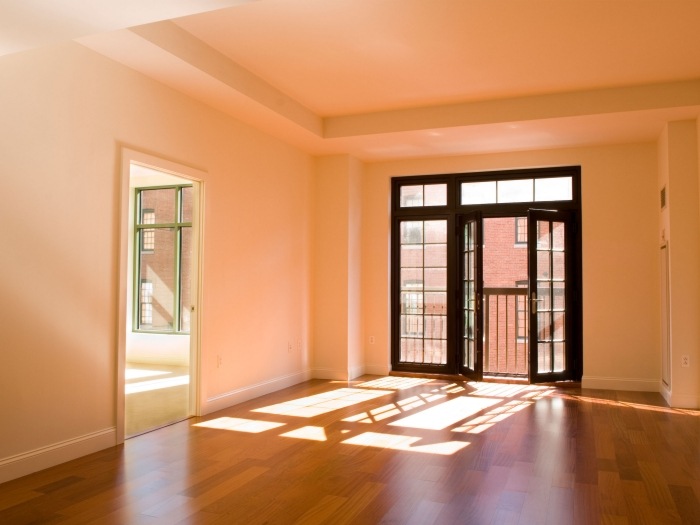
One First Condos Interior

Two rather small items, but quite noticeable about this development, come in the elevators and the insulation in the units.  Elevators across all five buildings are sophisticated and classy, lighted well by small recessed lighting.  Insulation within units is excellent – even after intent listening, buses going by outside one of the units that line Cambridge Street are only faintly audible.

There’s a relatively low investor presence in the building as it relates to rentals, with approximately 10 units used for that purpose – a comforting ratio for both residents and potential Lenders in the building.  One First does boast unusually spacious floorplans for comparable developments, as the developer and sales staff opted to, in some units, knock down walls where a second, smaller, bedroom may have been in an effort to open up living space, creating more open and flowing floorplans.

One significant factor that One First has in its corner is that the condo development, despite Buyers still being able to purchase units that have never been occupied, is an established development.  One First is approximately 76% sold, and has a very strong owner-occupied percentage.  These are items that both Buyers and Lenders look for in dissipating fears that a building is going to turn into a rental property, and from a pure lending perspective, One First boasts the kind of statistics that open up the credit markets so financed transactions can occur.

There are currently 48 units for sale at One First, ranging in price from approximately $414,000 for a 663 square foot one-bedroom, to $965,000 for a spacious two-bedroom of 1,626 square feet.  Average price per square foot for units listed for sale in the Boston MLS is approximately $600.

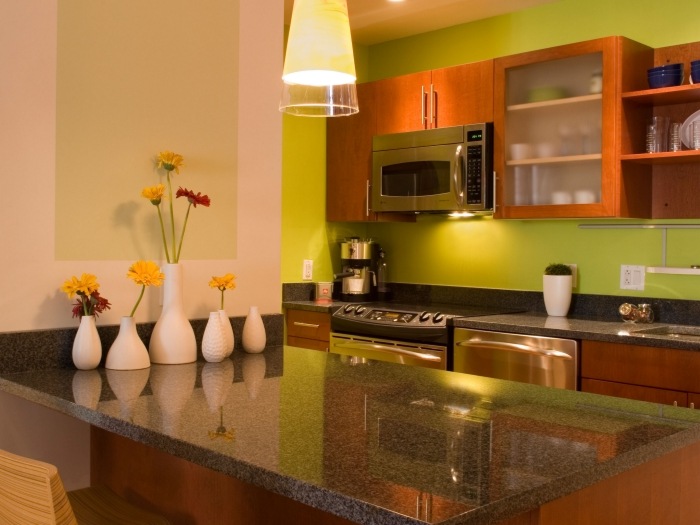
One First Condos Kitchen

Cambridge One First Courtyard

Wilkes Passage Condo Sales Now and Then

After a South End Wilkes Passage condo sold for full asking price in early February, it was time to take a look at pricing at the development.  Wilkes Passage is a 158-unit high-end loft-style condo development in Boston’s South End.  Over the past several years, the building has seen a turnover rate of approximately 10% per year, and given the development’s size, there are almost always units on the market for sale.

According the Boston MLS, on February 2, 2009, unit 509, a 1,889 square foot two-bedroom two-bathroom unit sold for full (original) asking price of $1,050,000.  That’s approximately $556 a square foot, and is in line with the $563 per per square foot seen for the four units in the building that sold over the past 3 months.  However, a year on year comparison shows that average price per square foot at Wilkes Passage has gone down.

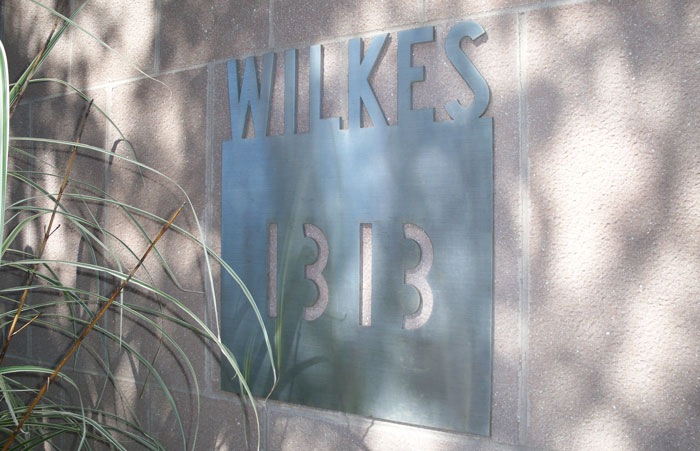
1313 Washington Street

For the same three month period in 2007-2008, there were again four units that sold at Wilkes Passage, however, a year ago, the average price per square foot was approximately $636, a 13% decrease year on year for the South End condo development.  Two of the four units (in both years) were luxury $1 million+ units, and based on a recent article (see Downtown Boston Market Slows in Piecemeal), the luxury market has seen slowdowns in the past year versus appreciation seen in the under $1 million market.

There are currently three condos for sale at Wilkes Passage, priced from $429,000 (790 square foot one-bedroom) to $775,000 (1,459 square foot one-bedroom), with an average price per square foot of $514. Additionally, there are multiple deeded garage parking spaces for sale in Wilkes’ underground parking garage.

Exclusive Broadluxe Auction Interview

Monday marked the completion of developer unit sales at Broadluxe, which represents one of the shortest building sales cycles in some time.   We had the chance to catch up with Brecht Palombo, Broker and Auctioneer of Tranzon Auction Properties, who played an integral role in the auction of Broadluxe, and post auction sales coordination. Broadluxe, a 44-unit loft-style condo development in the heart of the Financial District, was brought to auction on June 21, 2008 after a short marketing blitz.  The event was the most significant Boston condo auction of 2008, and was considered a success by many after Tranzon was able to sell 60%+ of the property on auction day, as well as making quick work of the remaining units for sale in the building post auction.

Can you tell us a little about Tranzon and your role with the firm?

Brecht Palombo: Tranzon is the premier national network of independently operated real estate auction firms. Tranzon Auction Properties operates throughout New England with a headquarters in Portland Maine and with my offices in Lexington Massachusetts. My team in Lexington is responsible for driving new business relationships in Massachusetts, Rhode Island and Connecticut and we service all of the southern New England auction business that’s written out of our headquarters.

How were you involved in the Broadluxe auction process?

Brecht Palombo: I was intimately involved with every aspect of the Broadluxe auction process starting with communicating with the developer when he was in default back before any real foreclosure proceedings began, through every aspect of the foreclosure auction, then through every aspect of the REO auction and finally I handled all of the negotiated sales of the remaining units after the auction. I worked with the lender, debtor, and lender’s counsel at Riemer and Braunstein etc. I was deeply involved.

What were some of the main factors that contributed to deciding when the auction took place, how long the property was open to the public before the auction, and the mechanisms by which you marketed and promoted the sale?

Brecht Palombo: The client determines when an auction takes place based on their business needs. The campaign lasted 27 days. The auction process is about controlling time and terms. The auction marketing process involves a broad, deep, and rapid exposure to the market on a very condensed time frame. In this case we relied heavily on technology, specifically a variety of online marketing initiatives, to promote the sale.

Was the auction considered a success, and if so, why?

Brecht Palombo: Absolutely. An auction is about a rapid recovery of capital. This campaign recovered two-thirds of appraised value in the first 30 days and recovered a total of 93% of the appraised value in 180 days according to the lender’s own internal documents. I’d point out that the appraisals we are working from were done in April/May of 2008, and Boston condo prices in this area have fallen during that time.

What was the biggest surprise that you ran into on auction day?

Brecht Palombo: There weren’t too many surprises but I guess I would say that what we saw was a number of successful bidders decided on the spot that they wanted to buy more than one unit and they weren’t prepared. We had to work with our client to accommodate them but I don’t think our flat-footedness on this item was apparent to bidders and it did allow us to sell several more units at the auction.

Broadluxe Lofts - Boston Financial District Condos

You’ve had listing experience (for individual homes), how much faster do you think the auction process and ensuing post-auction sales process sold these units versus the sales center approach we typically see in Boston?

Brecht Palombo: You folks may be better at answering that question than I am. How long would it take to bring a 44-unit building to market from zero to sold out in 2008? We sold 66% in 30 days, 80% in 90 days, and finished them off in less than 180 days. Have you seen any other new projects sell out in 6 months?

What was the reaction of the broker and agent community to the auction, and how do you think that those constituencies helped or hurt the auction?

Brecht Palombo: The reaction was mixed. I think some agents chose to ignore the project for whatever reason but there were a small number of agents who were very active and sold a number of units . MLS rules and regulations forbid us from entering every auction we conduct in the system but we almost always encourage broker participation unless our client forbids it, even then we’ll push back. We believe that embracing the brokerage community is in the best interest of our sellers. Brokers definitely contributed to our success.

What was one of the biggest lessons learned from the Broadluxe sales process?

Brecht Palombo: When we were first going to bring these units to market there was a lot of internal debate about how to get people there. There are a variety of methods at an auctioneer’s disposal. In the end we decided to go with guaranteed-sold published minimum bids. This meant that if you showed up and bid you were guaranteed a sale unless you were outbid. Our numbers were good for that day only. As I look at the success and failure rates of the various condo auctions over the last year, I think it’s pretty clear the bidding public approves of this message.

Do you foresee further development-level auctions (in Boston) similar to Broadluxe in 2009?

Brecht Palombo: Well we sure hope so… but if you’re asking if I see more lenders and developers embracing the auction process to eliminate inventory in 2009 the answer is a resounding yes.

Snowed In? Garage Parking Spot Investment Looks Clear

While supply and demand is the economic concept that resonates with most people, drilling further into that cornerstone of economics and looking at  economic scarcity, when availability is not enough to meet demand, is becoming more poignant in light of Wall Street’s meltdown, as well as the lack of melting snow. The investment merits of garage parking spaces to diversify and stabilize your asset pool, and prevent a complete time sync of shoveling your car out of a giant snow pile, is on the rise in Boston and across the country.

A cornerstone of finance is the concept of diversification, and with the S&P 500 down almost 40% in 2008, consumers and investors are on the lookout for assets that will simply hold their value, let alone appreciate.  Garage parking spaces have have become more attractive in the current financial market, and provide the diversification and potential future appreciation for several reasons.

Too many, or too few, parking spaces in Boston?

Looking at supply and demand, at the condo development level, it’s important to note that not all condo developments have parking garages (take Broadluxe for instance) and many condo developments have more condominiums than parking spaces in their garages (take Strada 234 for instance).  At the rowhouse level, say, in the South End, you typically see two outdoor parking spaces assigned to each address, but sometimes none, that being a function of rowhouses at one time serving as single family townhomes, and the availability of street parking (for residents) in some neighborhoods. That said, excluding the transient influx of parking demand for city employees and college students, parking spaces, especially garage parking spaces, are a scarce resource in Boston.

Do Boston Parking Spots Appreciate in Value?

Back in 2004, the Boston Globe put together an article (see Value soars on choice Hub parking spots) about parking spots at the Beacon Hill Brimmer Street Garage that were fetching $160,000, which at the time was quite monumental.  In 2008, parking spaces at the Brimmer Street Garage were selling for $250,000.  From 2006 highs, both median and average prices for deeded parking spots in Boston are again on the rise.  With the volatility in the financial markets, appreciation appears to be somewhat of a (bonus) afterthought notes a recent Wall Street Journal article (see When Stocks Tank..) that highlights consumers abandoning stocks and bonds and seeking refuge in unusual alternatives, including, parking spaces.

Snowed In Boston Parking Spot

And then there’s the convenience factor.  Regardless of whether you have direct access garage parking in your building, or if you have to walk outside to get to a garage parking space, finding your car cozy and warm with no snow, and no snow plow drifts, on your car is a nice feeling.

How to pick a garage parking spot?

Even within a parking garage itself, there are several factors that contribute to a parking spot’s value, namely, is it a corner or end spot, which increases the number of resale Buyers who would purchase the spot, especially those with high end automobiles.  Additionally, security, heat, level / floor (specific to multi-level garages), and proximity to an elevator all factor into the value. Finally, consider the popularity of the condo development (if applicable) associated with the garage, a popular location and building only increases the value of an investment in a parking space, versus making a purchase in a building not yet completely sold out or rented.

Snowed In Boston Parking Spot

Boston Property Taxes Decrease in 2009

Property taxes in Boston continue to decrease, with a 2009 tax rate of $10.69 per $1,000 of assessed value, down from last year’s $10.97 per $1,000 of assessed value.  Assessed values appear to be staying steady, which equates to a decrease in an absolute sense for taxes paid by downtown Boston homeowners.  Additionally, residents who maintain their Boston home as their primary residence qualify for a residential exemption, lowering tax bills by as much as $1,500+ per year.  For an up to date example of how to calculate taxes for your condo, as well as a historical look at tax rates in Boston, visit our newly updated Boston property taxes article.

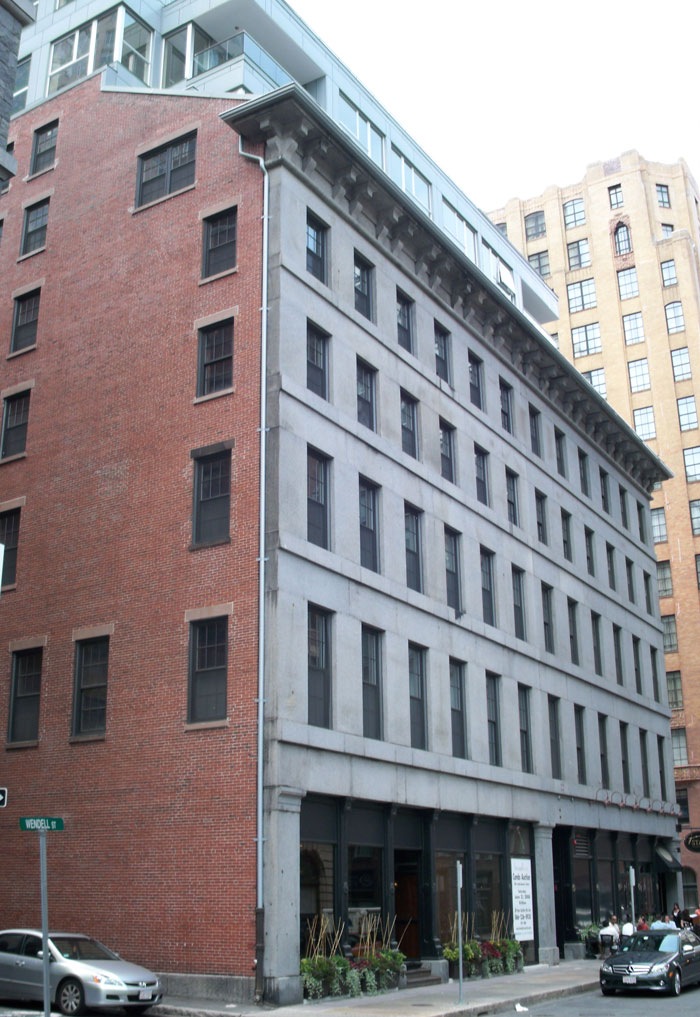
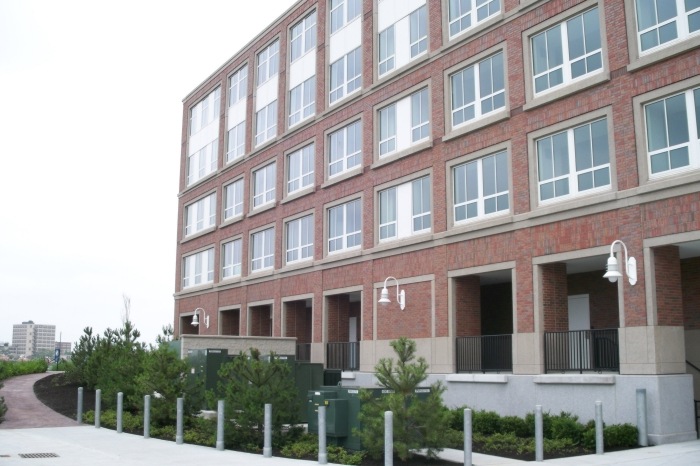
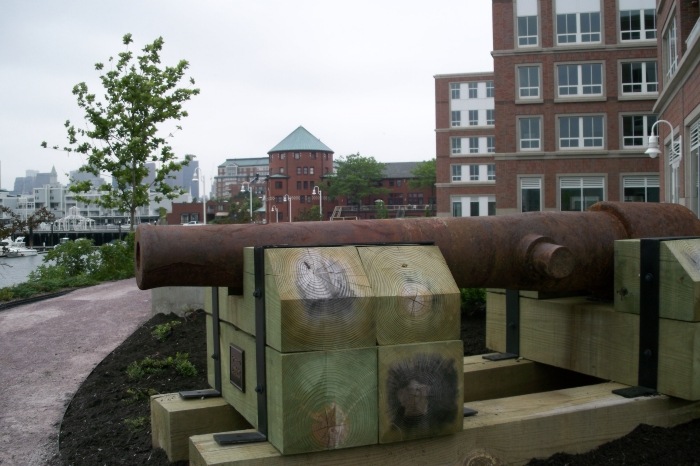
Harborview Navy Yard High End Rentals

The saga that was Harborview at the Navy Yard in Charlestown finally came to a close this fall as Roseland Property Company decided to stick with rentals, but the changes and confusion haven’t stopped. Originally priced between $3,050 and $5,500 for two bedroom rentals, management decided to lower its price to a more reasonable $2,800 for all of its two-bedroom units. While waterfront property is hard to come by in Boston, it’s no surprise to me that renters weren’t flocking to the property at $3,050 for their street-facing units.

Harborview at the Navy Yard

The reason for this was two-fold. First, the economy of course has had its impact on rents in Boston and was bound to trickle into the luxury market as executive and associate level unemployment has accelerated. Secondly, management’s offer lacked a differentiating factor to attract renters who might otherwise call Archstone Boston Common, West End Apartments or the like, their home. Some of the West End Apartments boast amazing Charles River views and the panoramic outlook from higher floors at the Archstone are hard to beat, so the water views are not enough of a factor amongst the competition. Also, despite condo quality units, their prices were the same or even more than most luxury apartment buildings in (downtown) Boston, and they had a less desirable location for commuting renters (in my experience renters have tended to be even more concerned with public transportation access than Buyers of for-sale condos).

Harborview at the Navy Yard

Harborview at the Navy Yard Rentals Now Discounted

However, things have changed at the Navy Yard. Rent was reduced to below market for luxury apartments, underground parking is now included – as are all utilities except for electricity and cable, and harbor views became affordable. After all, who wants to rent at the Harborview at the Navy Yard without a harbor view?

Harborview at the Navy Yard

Don’t believe that these deals will last. It’s normal for luxury apartment complexes to offer free months rent and other incentives to woo renters in the dull winter months. For instance, the Watermark, a luxury residence in Kendall Square, was offering its renters two months free rent if they signed a lease by January 1st and the West End Apartments are also currently offering reduced rent for winter leases. I expect that the spring will bring the rents back up in the low $3,000 range for two-bedroom units at the Harborview, but they will likely keep the parking incentive as long as there stands the availability to do so…We all know how valuable parking is in Boston, especially underground and Roseland would be keen to keep this advantage intact even after the slower season.

– Jay Alberino is the Founder & CEO of Eleven Park Realty, and has recently launched myCityApartment, a guide to houses and apartments for rent in Boston, Brookline, and Cambridge. Jay can be contacted to stay up to date with prices and offers, or to take a tour of Harborview at the Navy Yard or other luxury apartments in Boston.

Harborview at the Navy Yard

Allele South Boston Sales Velocity

After opening to residents in 2008, the Allele condo development in South Boston, which fuses standard housing features with those of typical lofts, has been somewhat slow to sell, perhaps a function of maintaining strong price per square foot values, competition from other condo developments in the immediate area that offer different living styles, and even the ups and downs that the financial markets have had on Buyers’ pocket books.

The current sales statistics for the building (below) evidence that the Allele sales team is remaining steadfast in positioning the value and price of the new development, and while the building is less than 20% sold, current residents have not been severely impacted by price reductions to the point where they find themselves stuck with negative equity in their units – a similar protective stance on behalf of early adopters is taking place at FP3 as well.

  • Number of Listings Sold: 9 of 48 (19%)
  • Average Sales Price: $627,889
  • Median Sales Price: $519,000
  • Average Price per Square Foot: $446

Two additional units (107 and 406) are currently Under Agreement, which would bring the percentage of building sold to 23%.  Parking spots in the onsite garage are being marketed as available for sale (and separate from the sale of a condo), and price points for remaining units are being maintained at levels of the previously sold units.

The Allele is not entirely alone in seeing slow sales velocity in the downtown market, however, there are other condo developments in the city (285 Columbus Lofts for instance) that have performed quite well in the volatile financial markets of the past 1.5 years.

Allele Boston Condos

While the new condo developments (Allele, Macallen, Lofts at 36 A) near the Broadway Red Line T-Stop are different on many accounts, HOA fees, and the amenities and services that those fees support, have been something that is talked about at each development, and a side-by-side comparison is warranted in order to ferret out if there are any real differences.

By putting together the below table, we have taken a look at units that are currently on the market at the three developments, and calculated the HOA fees on a price per square foot basis to help facilitate comparison.

Development

HOA Fee / Square Foot

What’s Included

Allele

$0.34

Heat, Hot Water, Gas, Water, Sewer, Master Insurance, Elevator, Landscaping, Snow / Refuse Removal

Macallen

$0.40

Heat, Hot Water, Gas, Water, Sewer, Master Insurance, 24-Hour Concierge, Swimming Pool, Elevator, Exterior Maintenance, Landscaping, Snow / Refuse Removal, Recreational Facilities, Exercise Room, Garden Area, Screening Room & Kitchen

Lofts at 36 A

$0.22

Water, Sewer, Master Insurance, Elevator, Exterior Maintenance, Snow / Refuse Removal

While breaking the numbers down in such a way makes it easy to see that the Lofts at 36 A have the lowest HOA fees on a price per square foot basis, and the Macallen Building the highest among the three, one needs to read between the lines in order to gain a truly fair comparison.  Simply put, the difference in fees is a function of what’s included or covered by that fee, however, it’s a nonlinear comparison.  The Lofts at 36 A truly have low HOA fees, and the construction of the building aids in keeping prices of certain amenities (heat for instance) in check, while on the higher end of the fee structure, the line is somewhat blurred between Allele and the Macallen Building, yet the Macallen Building has, by far, the most comprehensive amenity list in the area.  The energy efficient nature of the Macallen Building obviously helps keep fees low, but the economies of scale, given that the Macallen Building is almost three times the size of Allele, also plays a major role.

Allele South Boston

After much anticipation, the  Franklin  Cafe opened on the ground floor of the Allele, yet, that too has gotten off to a shaky start.  In early January 2009, reports were released that portions of the internal ceiling in the restaurant collapsed.  The incident caused approximately 8  people  to  be transported to the  hospital, none with life  threatening injuries. Boston Fire Spokesman Steve MacDonald stated the Franklin Cafe roof collapse occurred at the 152 Dorchester Avenue location just after 10 pm on January 3, 2009.  MacDonald stated that decorative panels attached to the ceiling may have caused the collapse, though a full investigation is underway.

Macallen Listing Stands Alone

Not long ago, all of the remaining developer units at the Macallen were removed from the Boston MLS and LINK systems.  The sales staff at the Macallen continues to show units via direct appointments, but does not currently appear to be soliciting sales via the broker community.  In light of this current, and more than likely temporary, situation there is only a single unit listed for sale at the Macallen Building via the MLS systems of Boston, and it just underwent a significant price reduction, making it the most attractive (figuratively and literally) condo in the 140-unit development.

Unit 206 is an 801 square foot south-facing unit on the 5th floor that is currently configured with a sleeping alcove, but could easily be converted into a true one-bedroom.  The Macallen Building, and its sister development, Court Square Press, are stacked with amenities, and given the economies of scale with the two buildings, access to these amenities is kept reasonably low with a $396 monthly HOA fee.  Originally listed at $448,800, the Seller recently reduced their asking price to $419,900.

The first open house at this new price point will take place Sunday, January 18, 2009 from 1:00 PM to 3:00 PM.

Macallen Building 206

Macallen Building 206 Kitchen