Willing to Sell Your Condo at Auction?

Over the past calendar year, there has been one condo auction that has taken place in Boston, at Broadluxe in June of 2008, and one just outside Boston, at Longwood Towers in April of 2009. 

These condo auctions were brought to market on behalf of institutional investors, those who owned the entire development.  Public auction as a selling mechanism has yet to take hold with individual condo owners, but is this a concept that will gain further momentum?

Crowdsourcing, the act of taking a task traditionally performed by an individual employee or contractor, and outsourcing it to an undefined, generally large group of people or community in the form of an open call, is a concept that has gained significant momentum over the past several years.  Especially in the wake of Threadless, a company that allows the general public to design and vote on what t-shirts the company produces and sells (and which, by they way, consistently sell out).  Is the concept of letting the consumer decide something that can transcend the housing market, via an auction?

Voice your opinion on whether you think such an auction concept has merit in the Boston condo market.

Would you sell your condo via a public auction?

If you could control the timing and minimum bid how likely would you be to use an online auction service to sell your property?

Eco Friendly Lighting Helps Condo Owners Save

Whether you believe in global warming or not, there is no mistaking the fact that humans make an impact on the Earth. In an effort to maintain a healthy planet, it’s imperative that we take steps now to help preserve our environment for future generations. Though there are many ways this can be achieved, it’s best to start off small with simple steps to help reduce our carbon footprint, conserve energy, and lower utility bills. One of the easiest ways to make these things happen is by making small changes to your condo through the use of eco friendly home lighting.

There are a number of benefits to utilizing eco friendly lighting, and it’s rather simple to get started. The easiest method is to replace standard light bulbs with Compact Fluorescent Lights or CFL’s – these are the light bulbs featuring a distinctive swirly design. Not only do CFL bulbs last up to 10 times longer than standard bulbs, but they also use roughly 25% less energy. Over time, CFLs can lead to a sizeable reduction in monthly electric bills – reducing energy consumption cuts down on the amount of fossil fuels, coal, and natural gasses used to power homes.

Once actual light bulbs have been switched out, focus can be shifted to light fixtures themselves. Modern lighting fixtures that feature the Energy Star seal of approval have been extensively tested and certified as environmentally friendly. Energy Star is a government-backed program helping businesses and individuals protect the environment through superior energy efficiency. You can find the Energy Star logo on a wide variety of products, many of which are home light fixtures. When a product like a lamp, pendant, or overhead light features the Energy Star logo, the product meets all the requirements set forth by the EPA and the US Department of Energy. Today many Realtors use the presence of Energy Star products as a major selling point in the context of a green home. Condo buyers are focusing more heavily on environmentally friendly amenities and they also know that more efficient products in the home equates to lower energy bills and more money in their (and potential buyer’s) pockets.

Eco friendly lighting initiatives play a big part in Boston’s green building projects. The addition of eco friendly light fixtures is one of the many steps taken to help produce new energy efficient homes for today’s marketplace. The Macallen Building, for instance, has used a vast array of green practices in the design and development of 140 high-end environmentally friendly condos. While lighting is but a small part in the overall scheme of the eco friendly home, it is certainly an important part of the city’s goal of building towards a brighter future.

Boston Homebuyer Tax Credit

Through the home buyer tax credit of the American Recovery and Reinvestment Act, an $8,000.00 tax credit is available for first-time home buyers on a primary residence purchased during calendar year 2009. While much has been written about the benefits of the credit, the following is intended to provide a high-level snapshot of the program’s requirements:

• A person is considered a first-time buyer if he/she has not had any ownership interest in a home in the three years prior to the day of the 2009 purchase.

• The amount of credit is determined by: (i) the purchase price (credit = 10% of purchase price); and (ii) the buyer’s income level (individual buyers with an income of $75,000.00 or less and couples with a combined income of $150,000.00 or less are eligible for the full tax credit).

• The credit is then phased between $75,000.01 and $95,000.00 for single taxpayers and $150,000.01 and $170,000.00 for married couples filing a joint tax return.

• The credit does not have to be repaid provided buyer occupies the home for 3 years or more.

• The credit is a “refundable credit” – if the purchaser’s total tax liability in the given year is less than $8,000.00, the IRS will send a refund for the balance (If, for example, the purchaser’s total tax liability = $7,000.00, the purchaser would receive a check for $1,000.00)

• A 2009 purchase may be claimed on the purchaser’s 2009 return or in the alternative, the purchase may be treated as if it occurred on December 31, 2008 thereby giving the purchaser the option of filing an amended 2008 tax return (see Form 1040X at www.irs.gov).

Bryant Back Bay Open House

After several delays in opening, the Bryant (formerly the Bryant on Columbus and now called the Bryant Back Bay) is poised for closings to begin next week.  The luxury development played host on Tuesday evening to a swath of real estate agents, many of whom were getting their first look at the development.

bryant-back-bay

The Bryant boasts many of the amenities that have become nearly ubiquitous for high-end condo developments in downtown Boston, in one of the premier locations in the city (offering both neighborhood South End feel and easy access to Back Bay and Midtown).  The questions, and more importantly, their answers, that are on the minds of most include:

  • Between 15 and 20 percent of the building has been sold
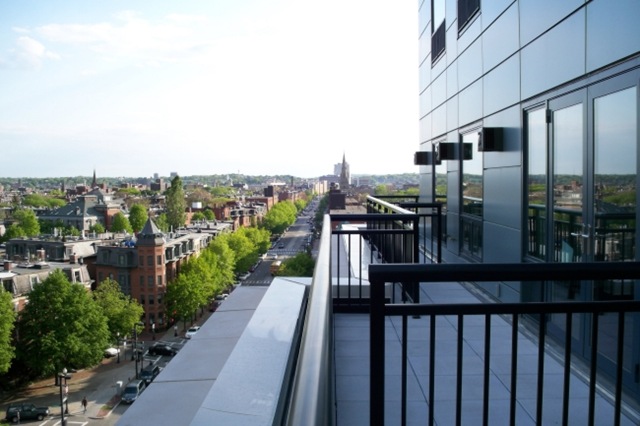
  • South End views really open up starting on the 8th floor (see panoramic view below taken from the 8th floor)
  • The back of the units (where the master bedrooms are situated) are much farther away from 131 Dartmouth than originally anticipated.
  • Lower floor units do receive substantial amounts of light

The most notable concern from buyers has been the proximity of the Bryant to 131 Dartmouth, and it’s impact on the building.  While 131 Dartmouth is immediately visible outside of the Bryant’s bedroom windows, 131 Dartmouth tapers away from the Bryant, and especially in the summer months, light pours into the back of units.

The Bryant Back Bay has a resident manager Katherine Collins, who will serve as concierge during the day, and Tillinger’s Concierge will handle the post after 4pm and on weekends.  Barkan Management is providing management services.  Soon to come amenities will include a fitness center with a massage room, a spa and state of the art equipment.  For a limited time, Buyers will receive a single one-year membership at Equinox Fitness Club, located around the corner at 131 Dartmouth.

With direct elevator access to units and parking, a highly desirable location supported by excellent nearby dining and nightlife, the Bryant is a stellar addition to the South End / Back Bay border.

Bryant 8th Floor View

Bryant 8th Floor Balcony Looking Down Columbus Avenue

Albert Pope Condo Sales in Boston

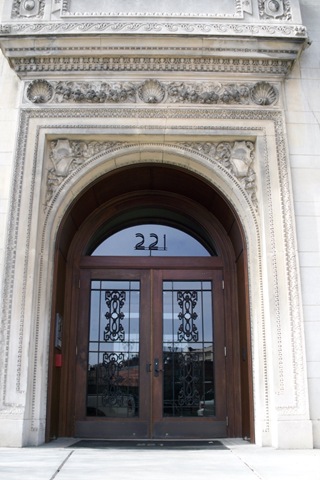
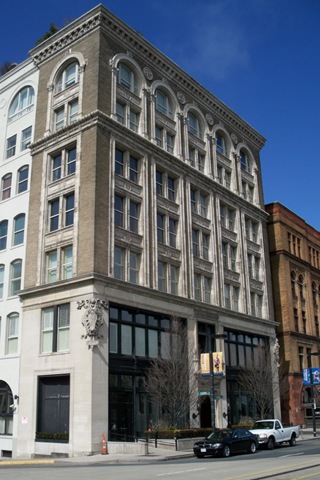
There are several condo developments in the heart of the city that maintain their appeal over the years in the midst of new inventory and choice around Boston, and the Albert A. Pope Building is one of those developments. That said, it’s rather surprising to see that the latest sale in the luxury building came at $577 per square foot.  Not so surprising is the fact that there has only been one sale in the development over the past six months – residents seem to stay longer in the Pope Building than in other developments, and coupled with the fact that there are only 25 units in the building, turnover is rather low.

221 Columbus Avenue Boston, MA 02116

Unit 203 in the development sold for $875,000 on April 30, 2009 after being on the market for 82 days with an original listing price of $949,000.  Condo fees for the unit are $1,094, and the unit came with a deeded parking space in the onsite garage, and access to the building’s common roofdeck.

Unit 203’s lower price per square foot, compared to a 12-month moving average of over $600 per square foot, could be attributed to its placement within the building, level, and the fact that the Clarendon Back Bay will block views of the Hancock Tower from the Pope Building (see Clarendon Back Bay to Block Pope’s View).

Nonetheless, the real estate community will need to place assumptions on the sidelines until another unit in the building comes available, at present, no condos are listed for sale in the boutique concierge-served Albert Pope Building.

Albert A. Pope Building

441 Stuart Street: What Happened?

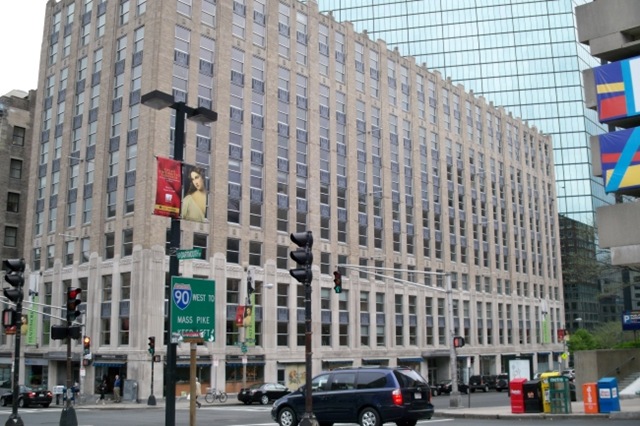
This week, the building at 441 Stuart Street was offered to the public through a foreclosure auction. The property was most recently purchased in 2004 for $37.5MM with the intent of converting the building to condominiums.

441 Stuart Street Boston, MA 02116

Recorded documents show that Corus Bank, a well-known condo conversion lender out of Chicago, placed $42MM in debt on the property in 2004. Corus Bank had received a “going concern” qualification from Ernst & Young, since then the bank has indicated that it is no longer “well capitalized” and the CEO has since announced resignation. Indications today are that it is very likely that Corus will fail in the very near term.

I’d estimate that there were 120 +/- attendees at the auction and I knew a number of the attendees who are high profile local developers. As I looked for bidders cards, I found eight. Manning, however, reported in another publication that there were 22 bidders. That’s a believable number, we had about the same at the foreclosure auction at the Broadluxe. The auctioner opened at $30MM and asked if there were any bids. There were not. Next he cut the bid in half and asked for $15MM, and the bids that followed were $15.1MM, $16MM, $16.1MM, and finally $17MM. There was only one 3rd party who bid the $15.1 and $16.1 against the bank. The lender bought the property back at $17MM.

Nevermind the fact that the highest 3rd party bid for the property was less than 40% of the known debt, consider the fact that the number represents only about $100/foot. Remember that this property is in Copley Square. If retail prices for completed condos are $600-900/SF and construction costs run $150-250 per foot then that’s a margin of 40% or better – isn’t it?

Where this market ends up remains to be seen, but one thing for certain is that we’re not out of the woods by a long shot. In fact we’re probably heading into the woods.  Expect to see more auctions and more foreclosures on substantial properties like this as we move through the next 24-36 months. Developers and investors who act during this window will be the ones talked about and envied at the top of the next peak…  just like those who bought in the early 90s and sold in the last few years.

MA Offer to Purchase Contract

The Offer to Purchase contract is generally regarded as the first step in the real estate transaction. The Offer to Purchase will include the purchase price, required deposits, a proposed closing date, and any terms which the purchase is contingent upon. Common examples of contingencies include the mortgage, inspection, and appraisal contingencies.

Unfortunately, many home buyers and sellers do not realize that with the acceptance of the Offer to Purchase, Buyer and Seller may very well have entered into a legally binding contract. Where the following three (3) elements are met, Buyer and Seller have entered into an enforceable contract: (i) the Offer to Purchase includes all of the essential terms of the contract; (ii) the Offer to Purchase is in writing and signed by the parties; and (iii) the parties intend to be bound by the Offer to Purchase.

Moreover, the general conception appears to be that any errors or omissions in the Offer to Purchase can be rectified in the more formal Purchase and Sale Agreement (“P&S”). However, this is somewhat erroneous as it is the Offer to Purchase that sets the outer parameters for the P&S. For example, should the Offer to Purchase fail to include a mortgage contingency, it will be extremely difficult to convince the Seller to agree to such a contingency in the P&S. Why? Because the Seller has based acceptance of the Offer to Purchase on the terms presented in said offer. To change the terms after acceptance is to change the rules of the game. This is not to say that additional terms and contingencies are categorically denied during the negotiation of the P&S. They are not. However, to ensure the inclusion of these contingencies, the Buyer will want to be absolutely sure that they are addressed in the Offer to Purchase.

To best achieve a properly structured Offer to Purchase, the Buyer should consider having their real estate attorney review the offer prior to transmitting it to the Seller. Most real estate attorneys will include this service as part of their flat fee, which has become the industry standard. Likewise, the Seller would be wise to have his attorney review the Offer to Purchase prior to the Seller’s acceptance – learn more about “When Does an Offer to Purchase Terminate“.

With a properly structured Offer to Purchase and acceptance of that offer, the Buyer and Seller will have identified the terms of the agreement and thereby established the expectations of the parties; a critical first step in what is often one’s single largest investment.

Developers Consider Accelerated Marketing Plans

In light of my most recent conversations with various constituencies across the industry, I have identified 5 reasons condo developers should consider an accelerated marketing plan today, versus postponing to a future date.

  1. We are still in a declining market. A number of reports just came out today confirming this. To claim otherwise is to be simply whistling past the graveyard. IHS Global Insight of Lexington announced an expectation that prices will drop through 2009. The IMF downgraded its worldwide and US economic forecasts today for 2009 placing the US at a -2.8% decline for 2009. Home prices will not rise amid a deepening recession.
  2. There is still time. A proper campaign can still be mounted to liquidate inventory between now and the week of the 4th of July. The Boston real estate market goes on vacation in late July and August. Now is the time to sell while the market is active.
  3. Lenders are getting impatient. Many banks need to get their money off the street. Workout officers are pulling back from offering extensions. An accelerated marketing plan can be an attractive offer for negotiating with a lender. If you are a developer with a note coming due in the next 12 months act sooner rather than later. Lenders are very likely to cooperate in instances where it’s possible that they would otherwise own the project. Carrying and disposition costs for fractured or broken condo developments are unpleasant and unpredictable. In my travels and in speaking with special assets and workout groups I can tell you they are not expecting it to get better soon and they are getting impatient.
  4. If you’re going to be short, tis better to be less short sooner than more short later. There is more value in a project today than there is next quarter or next year, that is the nature of a declining market. If you’re forecasting that you’ll be short or close to it today, you’ll be really short next quarter and wicked short next year. Take the pain, pull off the band-aid with one quick swipe, don’t opt for the slow bleed.
  5. Certainty in this market ephemeral. If things aren’t going as well as you’d hoped wouldn’t it be nice to forecast a conclusion? You might actually be able to sleep at night if there was some reasonably firm date upon which you could be assured that the thing you fear has come pass.

Boston Real Estate Observer Poised to Launch

In a continued effort to drive towards providing deeper and wider coverage of the Boston real estate market, the Boston Condo Blog will soon be rebranded and remissioned into the Boston Real Estate Observer. 

The goal of the Boston Real Estate Observer is to serve as a comprehensive and exclusive news source for Boston real estate. The mission and focus of the site will begin to slowly expand from simply residential real estate sales coverage to also include commercial real estate, lending and capital markets, rentals, condo developer news, the auction field, and real estate law.

Our focus on providing quality content will remain unchanged, and we are bringing additional contributors into the fold who specialize in unique niches of the real estate market in an effort to both maintain that focus on quality and provide the depth of coverage that our readers have come to expect.

We thank you for your continued readership.  In the short term, you will begin to see that the look and feel of the website will remain relatively the same, but with an updated logo (below) and new URL.

boston-real-estate-observer

Latest Sales at FP3 Boston

We’ve been receiving inquiries related to the latest sales at FP3.  Over the past 6 months, according to LINK (which does a scan of the Registry of Deeds on a regular basis), the only units that have closed in the building have been the affordable housing units.  Condo developers, by choice, opt-in to the affordable housing program sponsored by the Boston Redevelopment Authority (BRA). FP3 participated in the affordable housing program, and units deemed affordable went to a lottery and since have closed – no further affordable housing options are available at FP3.

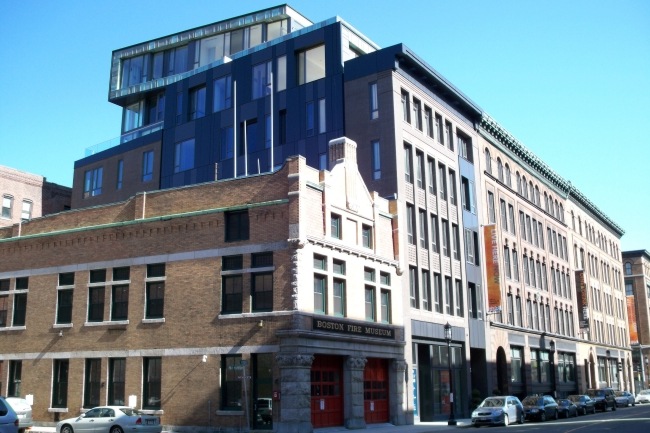
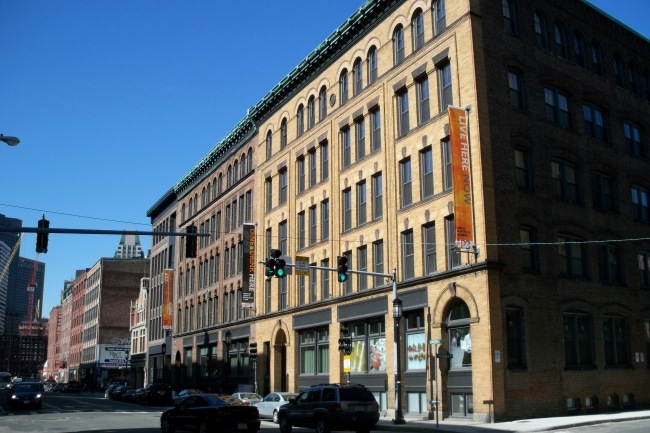
On the market-rate front, list prices were lowered on several units this week.  For instance, unit 311, an 850 square foot one-bedroom one-bathroom was reduced from $489,000 to $449,000, unit 205, a 1,031 square foot one-bedroom two-bathroom unit was reduced from $599,000 to $499,000, and unit 215, a 1,382 square foot two-bedroom two-bathroom unit was reduced from $719,000 to $699,000.  According to LINK, 16 of the 92 loft-style condos at FP3 have sold (17%).

FP3 Boston Lofts

FP3 Boston Condos